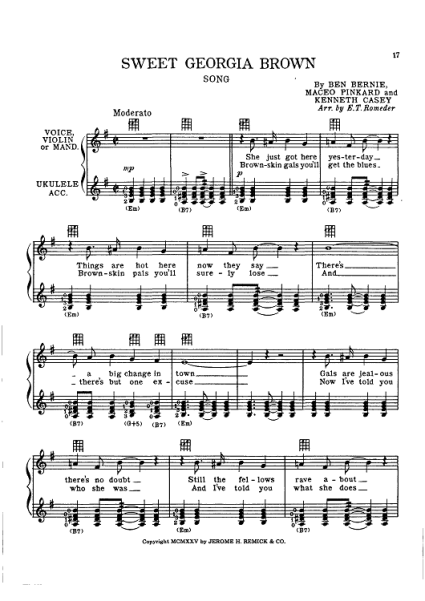
Rita Banerjee’s poems “Georgia Brown” and “The Suicide Rag” feat. on Painted Bride Quarterly’s Print Annual & Podcast, “Episode 27: Suicides & Skeleton Jazz”

georgiabrownPainted Bride Quarterly’s podcast, “Episode 27: Suicides and Skeleton Jazz,” features two new poems from Rita Banerjee.  Here’s is a message from the PBQ Editors:

In the midst of excitedly preparing for AWP 2017, we record this episode in which we discuss two poems by Rita Banerjee, “The Suicide Rag” and “Georgia Brown”

Rita Banerjee is the Creative Director of the Cambridge Writers’ Workshop and is currently working on a futuristic dystopian novel about Mel Cassin, a half-Tamil, half-Jewish girl stuck in the middle of a familial crisis and an epic political meltdown, and a collection of essays on race, sex, politics, and everything cool.  A jet-setter at heart, she spends her time between Munich, Germany and the United States.

This week’s discussion both took us back and made sure that none of us would see the world the same way again. With images of breakdancing, gospel choir, and the not-so-innocent Georgia Brown, we were in it. Whether we’re distinguishing jazz from jazz or figuring out what a clapper is, this episode is filled with risky moves.

Here is a sample of Rita Banerjee’s poetry:

Georgia Brown

Harlem had yet to be born,
the globe had not been spun,
but we knew how to whistle,
how to call clappers and skirts on cue:
That summer, we first met Georgia,
she was an echo in four beats,
we learned to hum her story.
Mike played her with a licked reed
but she was all brass, sharp
like an abandoned railroad cutting through
wild wood, and when she took stage,
she made those trombone boys whisper,
“Sweet Georgia, Sweet.”

The Suicide Rag

Billy played ragtime
on the church
organ but we

lunch hour kids,
kept time by another
name.  Behind St. Augustine’s

we learned to hit
the pavement, sound
like an anvil

crack
hammers hitting
steel, Billy playing

skeletons
on the fifth,
we arpeggioed

haloed, froze
on the black
top.  Learning

to cakewalk
This was our
battle—

tar-mat babies
doing handsprung
suicides

for the girls
standing ’round
with knife-like eyes

That’s all
we needed—
a rolling

beat, a firing squad
and schoolyard
skirts

scouring the lot
as we fell
face forward

hands locked
& stiff, the only
thing

that could’ve
come between
us was a kiss.

To here the full discussion of Rita Banerjee’s poetry, listen to the PBQ “Episode 27: Suicides and Skeleton Jazz,podcast here.

Rita Banerjee & Erik Kennedy discuss the New Jersey, Munich, and Christchurch Writing Scenes and Not Being Born in Golf-wear on The Rumpus

In “The Rumpus Interview with Erik Kennedy,” Rita Banerjee and Erik Kennedy discuss their formative years as young writers in New Jersey, their shared history of editing rival literary magazines in New Brunswick, and what it’s like to be American writers writing in English in the emerging and transformative literary scenes of Christchurch and Munich, respectively. Given the conversation’s local and international scope, the interview offers a playful challenge to the NYC vs. MFA model.  An excerpt from the interview follows below:

Banerjee: The New York–New Jersey metropolitan area is often jokingly referred to as “New Amsterdam.” That is, Jersey and the City are seen as having a radical, Calvinist, open-trade, and open-door vibe. A shadow of Dutch egalitarianism falls over New York and New Jersey. Both places are often seen as being very commercial and capital-focused, but the culture of Jersey and the City seems to be constantly renewed and reevaluated by an influx of people, classes, and narratives bumping into one another. It’s where the old and new, the familiar and the foreign, the seventh-generation American and the recent immigrant are forced to meet because people literally have to share the same sidewalk. And the very proximity of bodies being forced to occupy the same space creates an exciting kind of tension and dialogue between voices and values colliding into one another. So what do you think encapsulates a particularly New Jersey aesthetic?

Kennedy: I’m going to attempt the most New Jersey analogy I can devise. Maybe it’s like the Wildwoods, which, for people who don’t know, are a collection of seaside resort towns just north of Cape May, at the southern tip of the state. So there’s Wildwood proper, which is full of energy, youth, piss and vinegar, a magnet for revelers and revulsion; it can be invigorating, but, let’s face it, it’s also disgusting. And there’s Wildwood Crest, which is sort of family-oriented and sleepy and faintly pious (it’s a dry town and there are no rides or horrible game booths); you’re safe there, but are you really alive? And then there’s North Wildwood, which I don’t think anyone knows or cares all that much about; this represents the baseline, the semi-normal starting condition. These are the New Jersey id, superego, and ego that dwell deep within every native of the Garden State and, in their conflicting ways, inevitably energize such a person’s writing. Fair enough?

Reading the full “The Rumpus Interview with Erik Kennedy on The Rumpus here.

Erik Kennedy’s poems have appeared in (or are forthcoming in) places like Ladowich, Ohio Edit, and Prelude in the US, 3:AM Magazine, Oxford Poetry, and Poems in Which in the UK, and Landfall and Sport in New Zealand. He is the Poetry Editor for Queen Mob’s Teahouse.

Rita Banerjee is the Creative Director of the Cambridge Writers’ Workshop and teaches at Rutgers University. She received her doctorate in Comparative Literature from Harvard and her MFA in Creative Writing from the University of Washington, and her writing appears in Poets & Writers, Hyphen Magazine, Mass Poetry, Painted Bride Quarterly, Los Angeles Review of Books, Electric Literature, VIDA: Women in Literary Arts, Queen Mob’s Tea House, Riot Grrrl Magazine, Objet d’Art, KBOO Radio’s APA Compass, and elsewhere. Her first collection of poems, Cracklers at Night(Finishing Line Press), received First Honorable Mention for Best Poetry Book of 2011-2012 at the Los Angeles Book Festival, and her novella, “A Night with Kali” released in Approaching Footsteps (Spider Road Press), in November 2016. Finalist for the 2015 Red Hen Press Benjamin Saltman Award and the 2016 Aquarius Press Willow Books Literature Award, she is currently working on a novel and book of lyric essays.

AWP Exclusive: Rita Banerjee’s “Writing from the Fringe: Cultivating Writing Communities on Retreats and Abroad” feat. on the WC&C Quarterly

wcc-quarterly

2017 is an exciting year for AWP. We will be holding our 50th AWP Conference & Bookfair this month. Whether you just joined in 2017, or you have been with us for years, thank you for being a part of AWP. We are excited to see what the next fifty years bring.  In this issue, we hear from a Rita Banerjee, who discusses the successes Cambridge Writers’ Workshop has had building community near and far.

–Kenny Lakes, Editor

An excerpt from Rita Banerjee’s essay follows below:

The Cambridge Writers’ Workshop (CWW) began as a creative writing community in Cambridge, Massachusetts. Formed by graduate students at Harvard University in 2008, the workshop was meant as a forum for fostering communities of dedicated writers and encouraging creative expression in the literary arts. Since the organization’s inception, the Cambridge Writers’ Workshop has been all-inclusive and open to all emerging and established writers, first in the Cambridge and Boston area, and now in Brooklyn, Manhattan, across the United States, and also abroad. Since 2008, the organization has been run by directors Rita Banerjee and Diana Norma Szokolyai.

In 2011, the Cambridge Writers’ Workshop expanded to include online creative writing courses and writing retreats. We have participated in the Mass Poetry Festival, the Brooklyn Book Festival, Brooklyn Lit Crawl, Manhattan Lit Crawl, and the AWP Conference. All writers, from amateurs to professionals, who are looking for a serious writing community, are welcome to join the Cambridge Writers’ Workshop.

In 2012, the Cambridge Writers’ Workshop hosted its first writing retreat abroad at the Château de Sacy in Picardy, France, a rural country enclave just forty-five minutes outside of Paris. The focus of the workshop was on “Writing and Eco-Living,” and during our retreat in Sacy, our participants enjoyed fresh meals from the organic potager of the Château de Sacy, daily craft of writing seminars and writing workshops, and outings around Picardy. On our retreats, our instructors and participants have hailed from Australia, the US, the UK, France, Germany, and the Philippines. At our Sacy workshop, one of our participants began writing a poetry collection inspired by gaming and also produced a second manuscript about France, WWII, and the memory of her father. Another participant produced a wonderful series of lyric essays and memoirs on fleet week, public swimming pools, and interracial relationships in 1940s Brooklyn…  Read Rita Banerjee’s full essay here.

Rita Banerjee’s essay “Emotion and Suspense: The Essence of Rasa Theory” feat. on Poets & Writers Ampersand Podcast

pw-ampersandpodcastIn the latest episode of the Ampersand Podcast, Poets & Writers editors and cohosts Kevin Larimer and Melissa Faliveno discuss the January/February issue’s section on inspiration, The Darkness and the Light, in which contributors Frank Bures, Melissa Febos, Jay Baron Nicorvo, Nancy M. Williams, Kevin Simmonds, and Rita Banerjee engage with sometimes difficult material and find inspiration in the darkness.  The podcast also includes “Shadows of Words,” the twelfth annual look at debut poets, including Ari Banias, Jana Prikryl, Carolina Ebeid, Solmaz Sharif, Phillip B. Williams, Eleanor Chai, and Justin Boening, as well as Ocean Vuong, Safiya Sinclair, and Tommy Pico, who read poems from their debut collections.  Editor Melissa Faliveno introduces Banerjee’s article on rasa theory with the quote: “Rasa is a shot to the heart, it’s a festering wound, it’s the mind at unrest, and it is nobody’s captive. It can be dangerous.  It’s the moment where you loose yourself and loosen, and find in your body the first stirrings of emotion.”  To hear the full podcast, check out Ampersand here.

Rita Banerjee’s essay, “Emotion and Suspense: The Essence of Rasa Theory,” now available in Poets & Writers Magazine

Rita Banerjee’s essay, “Emotion and Suspense: The Essence of Rasa Theory” now appears in the January/February 2017 Inspiration Issue of Poets & Writers Magazine.  An excerpt from the article follows below:

“Rasa theory centers on taste. Not taste in the sense of sophistication or composure or discernment. Not taste in the sense of good or bad. But taste in its most primal, animalistic, emotive, and provocative form.

Rasa is what happens to you, spectator, reader, part-time lover, when you watch or read a work of art with intensity. Rasa is the flavor of the art experience. It is the feeling produced in the viewer when a work of art is at its most potent and devastating form. Rasa is the immediate, unfettered emotional reaction produced in the spectator when a work of art has left her breathless or yearning for more. Rasa means to savor, to bring a work of art within the body, to let words linger on the tongue. Rasa is a shot to the heart, it’s a festering wound, it’s the mind at unrest, and it is nobody’s captive. It can be dangerous. It can be pleasurable. A visceral form of taste, rasa tends to resist cultivation and containment. Rasa is what happens to you when you find yourself spellbound and alone, and completely enraptured by a work of art for just a moment. It’s where the emotional, narrative, and lyrical landscape of a work washes over, prickles, or consumes you. It’s the moment where you loose yourself and loosen, and find in your body the first stirrings of emotion…”

To read the full article, please check your local bookstores for the current issue of Poets & Writers Magazine or visit Poets & Writers here.

New Interview: “Behind the Story: Author and Scholar Rita Banerjee on ‘A Night with Kali'”

Pageflex Persona [document: PRS0000038_00068]Recently, Jody T. Morse of Spider Road Press, sat down with author Rita Banerjee to discuss the release of her new novella, “A Night with Kali” in Approaching Footsteps.  During the interview, Morse asked Banerjee about the inspiration for her novella, the structure and unique characters of her story, and what Banerjee is working on next.  An excerpt of the interview follows below:

Spider Road Press: “A Night with Kali,” is a captivating story. How did the concept for this piece come to you? Or, maybe a better question might be, what inspired you to write about Tamal-da and Didi?

Rita: When I first drafted this novella, I created the story of Tamal-da and Didi in a storm. In a week off between writing chapters of my dissertation on South Asian literary modernisms, I decided to take a break and write something with ferocity. There is something seductive about the idea of the uncanny, the sense of discomfort that appears in suspense novellas, sure, but also that strange tension between two people who meet but never quite see each other fully until it’s too late. Tamal, being a streetwise taxi driver, and his passenger, whom he calls Didi, being a bored out-of-towner obsessed with Marxist poets, makes for an uneasy alliance. They are trapped together in a cab and stranded in the middle of a monsoon hitting Kolkata. To pass the time, they entertain each other with stories. What happens next is uncanny, unbelievable, and strangely seductive.

SRP: And we love their dynamic! Thank you for bring them to life in our imaginations. In our opinion, A Night with Kali is a story within a story. Did you find it challenging to write such an intricate tale? And, for our readers that are writers, were there any particular hurdles or revelations about this choice and process that you could share? 

Rita: From the Pañcatantra to the Arabian Nights to Mary Shelly’s Frankenstein, I’ve always been interested in stories within stories—with narratives that stop, tunnel, re-start, take you down a rabbit hole and bring you back more alive.

SRP: What’re you working on these days—both in writing and in personal ventures?

Rita: I’m actively working on a few book projects—a book on mid-20th century South Asian poetry and theories of the avant-garde, Echo in Four Beats, my second poetry collection on jazz, mythology, and the breakdown of language, and two new creative writing manuscripts which are currently taking over my life. The first is a collection of non-fiction lyric essays, centered on the concepts of race, sex, politics, and cool, and why I’m completely obsessed with interrogating these ideas as a writer, artist, and human navigating the world. The second book I’m currently working on is what seems like a now eerily prescient novel about a girl named Mel Cassin. Mel lives in a near-future America run by a plutocratic totalitarian regime in which arbitrary laws for the non-elite are normative. Mel faces a conundrum—to pursue what has happened to her family, or to continue existing in an authoritarian world.

Full interview available at “Behind the Story: Author and Scholar Rita Banerjee on ‘A Night with Kali.'” 

Book Release: Rita Banerjee’s novella, “A Night with Kali,” in Approaching Footsteps now available in Print & on Kindle Books!

Pageflex Persona [document: PRS0000038_00068]Rita Banerjee’s novella, “A Night with Kali,” in Approaching Footsteps, has just been released on Kindle Books and in print!  In Rita Banerjee’s novella, A Night with Kali, two people from different classes, a taxi driver called Tamal-da and his well-to-do passenger meet under unusual circumstances. Stuck together in a flood in the middle of a monsoon hitting Kolkata, Tamal entertains his bored, out-of-town passenger by telling her the story of his life. As he explains how he ended up hustling the mean streets of Kolkata, how he abandoned his rural village, and why he left his family of fishers behind, Tamal spins a tale that is both mundane and fantastic. Built on the tradition of Bengali ghost stories, Tamal’s coming-of-age tale depends as much on the supernatural as on the possibility or impossibility of human connection.  On Approaching Footsteps, the following reviewers write:

“Four novellas and a wealth of bonus flash fiction stories make Approaching Footsteps a collection that a reader can dip into anytime. Two novellas stand especially tall: A Night with Kali, by Rita Banerjee, begins with a taxi ride through Kolkata during a monsoon and soon develops into an entertaining story-in-a-story supernatural tale reminiscent of classic Indian literature.  In 136 Auburn Lane, novelist Donna Hillevokes a mysterious Harlem boarding house in the 1930’s, where a down-and-outwoman has one final chance to rescue her pitiful existence.” -Gay Yellen, author of The Body Business and The Body NextDoor

“’A Night with Kali’” by Rita Banerjee was a pair of ghost stores-within stories-within a story, set in Kolkata and the surrounding villages. The voice was distinct but unobtrusive and created a cozy familiarity with the narrator. The setting was also particularly vivid, but never got bogged down in exposition – rather, well-placed details sprinkled throughout made me feel like I’d lived in the area all my life. This was my favorite of the four, partly because it was the most upbeat. That may sound strange for a ghost story, but it works.” – MJL

Rita Banerjee’s “Chicago Ode” – A Mass Poetry: Poem of the Moment

masspoetry-poemofthemoment
Many thanks to Mass Poetry for featuring Rita Banerjee’s poem, “Chicago Ode,” in their Poem of the Moment section.  Mass Poetry supports poets and poetry in Massachusetts.  Mass Poetry helps ro broaden the audience of poetry readers, brings poetry to readers of all ages and transform people’s lives through inspiring verse.  A copy of the poem is included below, and you can read the full poem on Mass Poetry here.


Chicago Ode

You came quiet on
cat feet with
disregard
for minor names

Like architecture,
you remained
aortal and stung—

Colors dropped
off grids and arcs
bending like yellow,
red and unglued blue

You moved like
a river under
Boul Mich elevated
trains

undulated space,
kept sails and lovers
lit on harbor.

like bodies lit
on grass, you stood
unlike bronze

unlike concrete, too
contained in no
form, no limb
that would move

like fever
your eyes grew
catlike, calling to
strange bodies,

locking lakes in land,
you asked time to
sneeze, hiccup, to not
speak at all—

asked to linger no
longer or to
stay longer like

cracklers at night,
the firework’s parched
breath & Ferris wheel
lights that held

like ships & whistles
a cradle
without thread.

* Read the poem on Mass Poetry here.

Rita Banerjee’s novella, “A Night with Kali,” in Approaching Footsteps now available for pre-order from Spider Road Press

Pageflex Persona [document: PRS0000038_00068]Enjoy suspenseful tales with unexpected twists? In Approaching Footsteps, four compelling novellas by talented women will keep you guessing. Best-selling novelist Donna Hill spins a gripping tale of desperation and danger. Author Jennifer Leeper puts a unique spin on noir fiction. Writer and scholar Rita Banerjee blends a story of two unlikely allies trapped in a monsoon with a tale of murder and magic. Debut writer Megan Steusloff tells the story of an interracial couple and the deadly price that must be paid for freedom.Reader’s Bonus: Highlights from Spider Road Press’ recent flash fiction contests. Spider Road Press donates 5% of the proceeds from its titles to charities which address the issues of sexual assault, supporting American veterans, empowering youth and fighting hunger at home and abroad. Pre-order Approaching Footsteps from Spider Road Press here!

In Rita Banerjee’s novella, A Night with Kali, two people from different classes, a taxi driver called Tamal-da and his well-to-do passenger meet under unusual circumstances. Stuck together in a flood in the middle of a monsoon hitting Kolkata, Tamal entertains his bored, out-of-town passenger by telling her the story of his life. As he explains how he ended up hustling the mean streets of Kolkata, how he abandoned his rural village, and why he left his family of fishers behind, Tamal spins a tale that is both mundane and fantastic. Built on the tradition of Bengali ghost stories, Tamal’s coming-of-age tale depends as much on the supernatural as on the possibility or impossibility of human connection.

Rita Banerjee’s novella, “A Night with Kali,” published by Spider Road Press on November 18, 2016

kalistatueRita Banerjee’s novella, A Night with Kali, will be published in Approaching Footsteps, an anthology of four suspenseful novellas by authors Donna Hill, Rita Banerjee, Jennifer Leeper, and Megan Streusloff.  The anthology is edited by Patricia Flaherty Pagan of Spider Road Press, a feminist press based in Austin, TX which believes that books in America, Canada and the UK should reflect the diversity of these wonderful nations, and that all brave, intelligent writing is literary, no matter what the subject matter. Spider Road Press donates 5% of the proceeds from its titles to charities which address the issues of sexual assault, supporting American veterans, empowering youth and fighting hunger at home and abroad.  If you would like to review a galley copy of Rita Banerjee’s A Night with Kali in Approaching Footsteps, please contact Spider Road Press at here.  And here is a little bit about Rita Banerjee’s novella:

In A Night with Kali, two people from different classes, a taxi driver called Tamal-da and his well-to-do passenger meet under unusual circumstances. Stuck together in a flood in the middle of a monsoon hitting Kolkata, Tamal entertains his bored, out-of-town passenger by telling her the story of his life. As he explains how he ended up hustling the mean streets of Kolkata, how he abandoned his rural village, and why he left his family of fishers behind, Tamal spins a tale that is both mundane and fantastic. Built on the tradition of Bengali ghost stories, Tamal’s coming-of-age tale depends as much on the supernatural as on the possibility or impossibility of human connection.