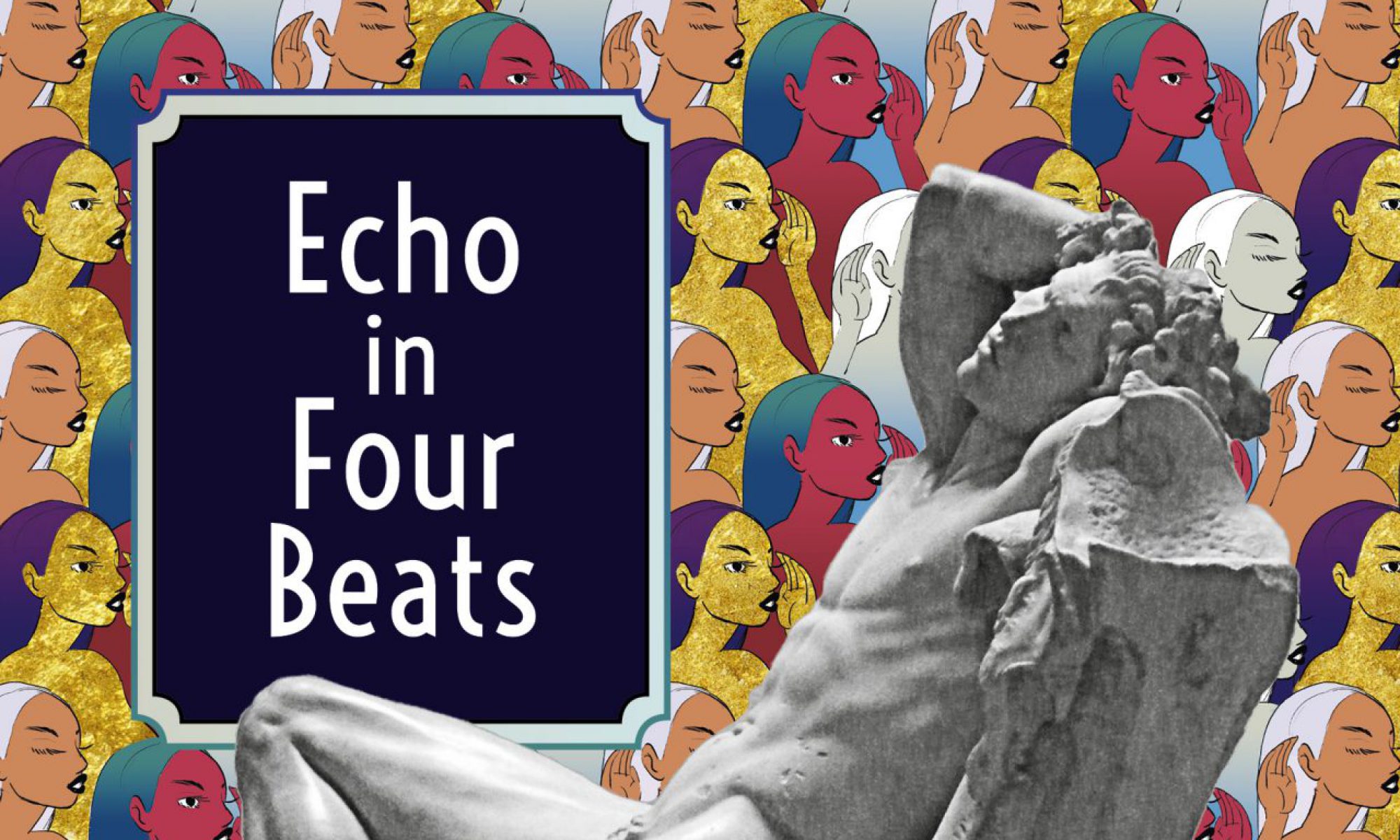
The Cambridge Writers’ Workshop just published their Here’s to 2016 Literature & Film Recommendations! To celebrate a new year of writing retreats in Newport, RI, Barcelona & South of France, and Granada, Spain, the CWW staff has written about their favorite lit picks and films! Some of these works that have inspired our own writing and changed how we think and see the world, and other works have just stayed with us, entertained, or made us stop, stare, or smile for a little while. The list has been curated by Alex Carrigan and contributors include Rita Banerjee, Alex Carrigan, Alyssa Goldstein Ekstrom, Casey Lynch, David Shields, Emily Smith, Diana Norma Szokolyai, and Emily Teitsworth. Here are some “Here’s to 2016” literature & film recommendations by Rita Banerjee. For the full list, please visit CWW Recommends!
Rita’s Lit Picks:
 Naomi by Jun’ichiro Tanizaki
(Recommended by Rita Banerjee)
Naomi was the first novel I read that I literally threw across the room when I was done it. For those bored by Nabokov for “his style,” Naomi, written by Jun’ichiro Tanizaki in 1924, gives Lolita a run for its money and then some. The novel focuses on the story of Jōji, a mundane, over-educated, routine-driven Japanese salary man, who one day, as he’s walking around a particularly seedy part of Tokyo, spies a beautiful young Eurasian-looking girl named Naomi. Naomi, who’s put to work as a waitress in a café by her parents, is both young (she’s only 15 while Jōji’s a healthy 28!), and exotic (her face and eyes look Western as does her foreign-sounding name). Needless to say, Jōji falls head-over-heels in lust with Naomi and has to have her. He tells Naomi’s parents that he’d like to “adopt” Naomi. He promises to raise her like a daughter–give her a “good education” and all the luxuries a young modern girl could want in life. And somehow, Naomi’s parents agree (anything for a quick buck). So Jōji lures Naomi into his home. He promises not that nothing untoward will happen between them until she’s at least 18 and can give him her consent. But in the meantime, he’s happy to attend to her daily bathing rituals (I think you know where this story is heading…) But alas, it turns out that Naomi has a mind of her own. She immediately notes that Jōji hopes to transform her into a Mo-Ga (モ-ガ, modern girl), and she raises his stakes. She comes to embody everything Western, everything sexy, and everything dangerous about modern women. She takes up dancing, she takes up Jōji’s wallet (spending and partying until his cash is through), and most of all, when Jōji approaches her for sex, she uses her body against him, and parades an ever-rotating line of boyfriends under his nose. In reading Naomi, it’s hard to figure out who’s the protagonist and who’s the antagonist. Jōji and Naomi seem equally conniving and crooked. At the end of the novel, you don’t know who you’re rooting for, and you don’t know how you could care for a character so perverse. Naomi might make you want to throw the novel across the room, straight out an open window, and shout a string of expletives after it. Or, it might make you do something completely opposite. And that’s where Tanizaki’s great power lies: in making you, the reader, feel.
 Glengarry Glen Ross by David Mamet
(Recommended by Rita Banerjee)
One of the best theatrical performances I’ve seen to date was “Stealing the Leads,” an all-female led adaptation of David Mamet’s 1984 Pulitzer Prize winning play, Glengarry Glen Ross. Mamet’s play focuses on the fall-out of late capitalism (a term that’s been hotly debated since at least 1848 ;-)). The play focuses on a crew of desperate and despairing business men in Chicago as they attempt to close-deals, form alliances and mergers, and profit on real estate acquisitions before their rivals steal their leads or sabotage their careers. This is a story about businessmen and corporations in the middle of a meltdown. And it’s full of bites and stings (take those lacerating comments on the Patels and South Asian businessmen taking over finance…) But most of all, the play is an exercise in masculinity. In the world of Glengarry Glen Ross, the characters assume, that in order to desire and have power, the most successful candidate has got to be an alpha-male. Mamet slightly destabilizes this notion through small sleights of hand. But the best kick to the patriarchy happens when an all female cast performs Mamet’s play. One of my favorite renditions of Mamet’s play, “Stealing the Leads: Women Read Glengarry Glen Ross,” was performed in Berkeley’s famed Pegasus Bookstore a few years back, and it was spooky to see these women transform into testosterone-driven business men. The play, once in the hands and voices of an all-female cast takes on a new edge. The play’s do-or-die ethos and cast of saboteurs no longer revolve around the crisis of money and power. But what’s at stake itself is the underlying anxiety in Mamet’s writing: masculinity, itself.
 Death of a Punk by John P. Browner
(Recommended by Rita Banerjee)
In Munich, Germany, I teach creative writing classes at a pretty nifty little English-language bookstore called the Munich Readery. And one of the owners, John Browner, is not only an author, himself, but was part of the NYC underground punk scene in the late 70s and early 80s. His novel, Death of a Punk, combines the frenetic, no-fucks-allowed peroxide cool of CBGB’s with the beats and campy electricity of a noir thriller. The novel centers on what happens when Lenny Hornblowner, who moonlights as a private eye and is a fat middle-aged square (by his own estimation), is hired Mrs. “Call me Lisa” Perlont to find her “beloved” stepson, Blinky, a young man whose gotten himself lost in the carnival of New York’s first-wave punk scene. The result, as Browner labels it, is meant to be an “airport read” highlighting an alternative New York where the snarky ads in the Village Voice, three-chord punk spiked with cocaine, and the elegance of defending your turf with just a pair of brass knuckles reign supreme.
MFA vs. NYC, ed. Chad Harbach & Workshops of Empire by Eric Bennett
(Recommended by Rita Banerjee)

 Anything produced by N+1 is part magic. And the press’s 2014 collection, MFA vs. NYC is no exception. (I remember reading this anthology in one sitting on the airplane ride back home from AWP 2014). The anthology, edited by Chad Harbach, draws a fault-line between American creative writing communities: those centered in big, commercial, cocktail-party-driven metropoles such as New York, and those produced in well-groomed, well-crafted but often myopic literary networks of the American MFA program periphery. While Harbach’s categorization of these two diametrically-opposed literary spheres and successful enclaves of American fiction veers towards essentialism, MFA vs. NYC offers an eye-opening look into what it takes to be a writer in the 21st century. Essays such as “My Parade” by Alexander Chee, in which the author wryly interrogates the racial and gender politics inscribed in the very curricula of the Iowa Writers’ Workshop are thrilling to read. As are essays such as “Seduce the Whole World” by Carla Blumenkranz, in which the author examines the-larger-than-life persona of Raymond Carver, whose minimalist aesthetics, mystique, and influence were largely crafted and set in stone by his editor Gordon Lish. Other essays such as “Into the Woods” by Emily Gould and “Money (2006)” by Keith Gessen offer unapologetically candid looks at the financial woes and socioeconomic dilemmas which haunt contemporary American authors. And one of my favorite essays in the collection, Eric Bennett’s “The Pyramid Scheme” examines how the Iowa Writers’ Workshop rose to the top of the American MFA empire in the mid-20th century, partly due to funding from the Fairfield Foundation, a dummy corporation set-up by the CIA. Bennett examines how Paul Engle, the second director of the Iowa Writers’ Workshop, utilized CIA money to round-up left-leaning individuals from around the world and set the rubric for 20th century American literary tastes. Needless to say, I’m looking forward to reading Bennett’s new book Workshops of Empire: Stegner, Engle, and the American Creative Writing during the Cold War this Spring.
 Voyage of the Sable Venus by Robin Coste Lewis
(Recommended by Rita Banerjee)
Robin Coste Lewis’s debut collection of poems, Voyage of the Sable Venus, just received the National Book Award for Best Poetry Book of 2015! The collection is a spiky, electric trip through confrontations of race, racism, agency, responsibility, and encountering other people and other cultures. The title of the collection takes its inspiration from Thomas Stothard engraving, “The Voyage of the Sable Venus from Angola to the West Indies,” an infamous propaganda piece for the African slave trade. But in Lewis’s book, the fault and possibilities of history lie in all hands. In her opening poem, “Plantation,” the speaker confides, “I could tell you the black side / of my family owned slaves // I realize that perhaps / the one reason why I love you, / because I told you this / and you–still–wanted to kiss // me. We laughed when I said plantation / fell into our chairs when I said cane.” Discomfort, fascination, guilt, awe–these are only some of the series of emotions which weave through Lewis’s verse as she examines the ways in which images and narratives of black women, black bodies, and the black voyager have been depicted in art, propaganda, and in personal histories. Cultural and psychic ambiguity hover over Lewis’s work as the speakers of her poems reflect their own private travels and own private traps, or as the speaker of “Plantation” recalls, “You said, The bars look pretty, Baby / then rubbed your hind legs against me.”
 Sapiens: A Brief History of Humankind by Yuval Noah Harari
(Recommended by Rita Banerjee)
I first heard of Yuval Noah Harari a few years ago when I was researching MOOCs, and took his class on the History of Humankind, which was “telecast” from the University of Jerusalem. Harari’s lectures were engaging, self-deprecating, informative, and fantastic. In 2015, his book, Sapiens: A Brief History of Humankind, was translated from Hebrew into English. The book, like Harari’s lectures, explores how Homo Sapiens came to be the dominant human species on earth and how their rose to power. Harari’s discussions on ethnicity and the genetic basis for race are eye-opening and provocative as are his discussions of the cognitive, agricultural, and industrial revolutions. One of my most favorite sections from Harari’s text focuses on how human societies are formed: through fictive language and gossip culture. It appears that everything from our fascination with God to our fascination with Louis Vuitton and fascism derive from our very human love of myths. As Harari explains, it’s the storytelling that brings us together, and it’s the fictions of our lives and our understandings of the world that bind.
Rita’s Film Picks:
 Me and Earl and the Dying Girl (dir. Alfonso Gómez-Rejón)
(Recommended by Rita Banerjee)
The first time I met Jesse Andrews, he was jumping out of the sky. Literally. It was about a year and a half-ago, and we were celebrating a mutual friend’s wedding. More specifically, Jesse, the groom, and their friends were celebrating the groom’s last days of bachelorhood by jumping out of a plane, flying three miles high over Newport, Rhode Island. As you’d expect, Andrews made quite an entrance as did his book, Me and Earl and the Dying Girl. In 2015, Alfonso Gómez-Rejón’s film of the same title made it’s stellar debut and won the Sundance Film Festival’s Grand Jury Prize and Audience Award. The film follows the narratives of three mismatched characters, Greg, a loner and awkward film nerd who sits outside of all the usual social cliques in high school, Earl, his African-American fellow film buff and would-be friend, and Rachel, a girl of their acquaintance who has recently been diagnosed with leukemia. Through the course of the story, Greg is forced by his mother to befriend Rachel who’s feeling increasingly isolated and alone due to her sickness. To cheer her up, Earl introduces Rachel to the pastiches and short fan parodies of classical art house cinema (like Rashomon, A Clockwork Orange, Breathless, etc.) that he and Greg have made in their spare time. Greg feels that showing Rachel their secret films is a betrayal of their trust, but as Rachel’s chemotherapy begins to worsen her health, he begins to change his mind (a lot). Soon Greg and Earl are commissioned to make a short film for Rachel by Madison (Greg’s crush). And as the stakes of the film are raised, the trio find themselves dancing around issues of friendship, trust, and vulnerability like particles drawn together and repelled apart. The film which Greg finally makes for Rachel is breathtaking and full of emotion. That scene alone makes Me and Earl and the Dying Girl a film I wish I had made and a book I wish I had written.
 Haider (dir. Vishal Bhardwaj)
(Recommended by Rita Banerjee)
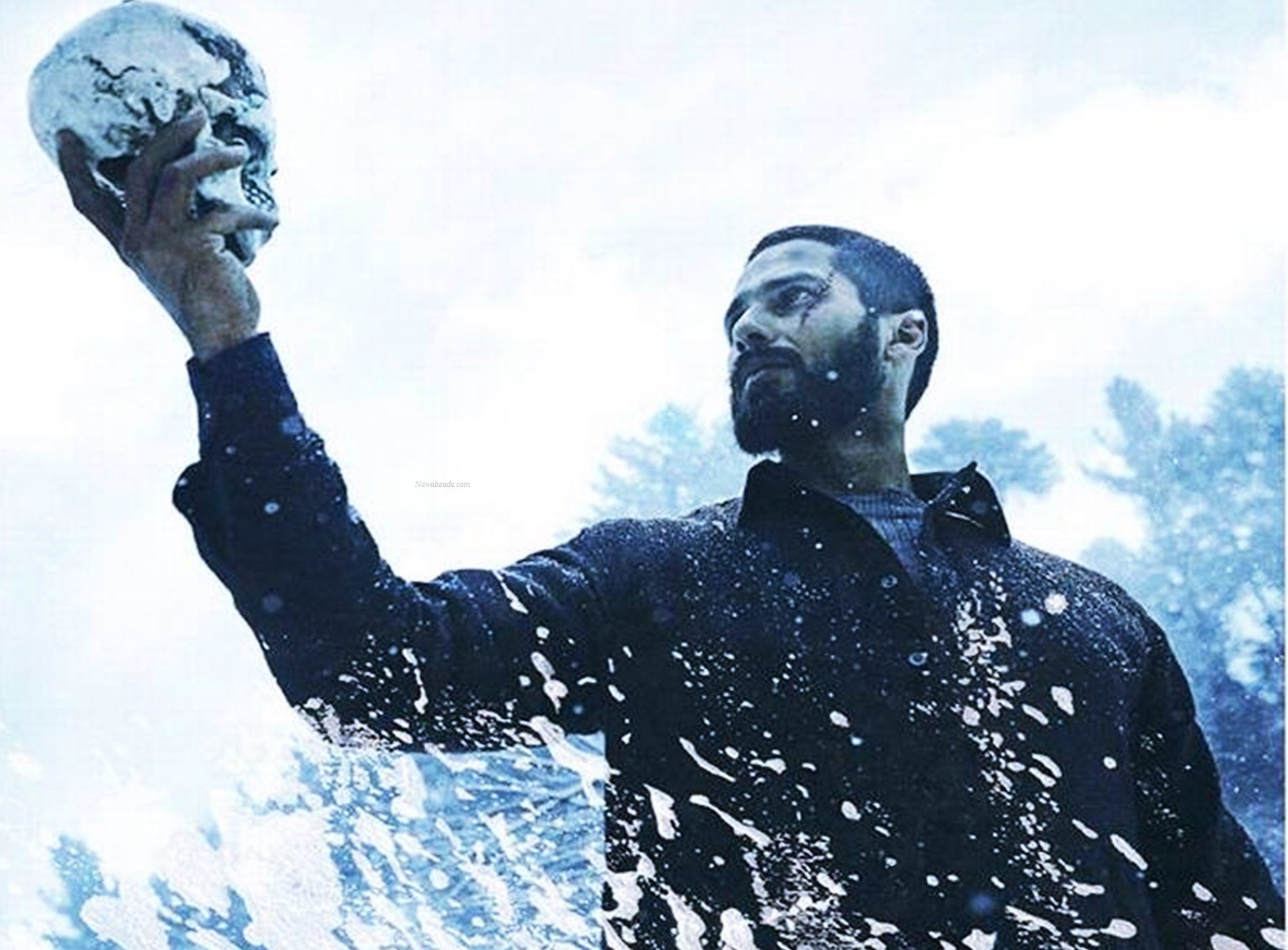
Haider is a gorgeous little film made by Vishal Bhardwaj, a director who has adapted other Shakespearan classics such as Othello and Macbeth for popular Hindi cinema. Haider, an adaptation of Hamlet, is not exactly Bollywood, and it’s not exactly Hamlet either. The film is set in the turbulent political era of 1990s Kashmir, a territory continuously fought over by the Indian and Pakistani army since 1948. The drama of the film evolves from the story of one family. Hilal Meer is a doctor in Kashmir who secretly tends the wounds of separatists and insurgents, who are attempting to free Kashmir from Indian rule. One day as he is nursing a pro-separatist leader in his house, the Indian army pulls up and orders all men and women to appear before their council. When it is Dr. Meer’s turn to face the council, a hooded whistle-blower calls him out, and he is lead away somewhere (presumably to a concentration camp or to death). His ancestral home (along with the separatist patients hidden there) is subsequently destroyed. When his son, Haider returns home, he realizes that not all is what it seems. For one thing, his mother Ghazala, a “half-widow” is dancing and singing in the arms of his uncle, Khurram Meer, a well-to-do lawyer who later decides to run for office. Haider is also haunted by the question of whether his father is actually dead or alive, and who betrayed his father’s trust. As the story unfolds, the relationships and tensions within Haider’s family and community take on a sinister twist. The implosion of family ties and trust on screen becomes symptomatic of the violence and greed which tear the sociopolitical fabric of Kashmir apart. And watching this story of Hamlet unfold in such unexpected ways is both heart-stopping and poignant.
 The Russian Woodpecker (dir. Chad Garcia)
(Recommended by Rita Banerjee)
I had a chance to see Chad Garcia’s gorgeously shot film, The Russian Woodpecker, at the Filmfest München last year. A student of mine, inspired by our discussions on Marxism in class, recommended the film to me. The Russian Woodpecker follows the life story and quixotic hero’s quest of Fedor Alexandrovich, a painter and theatre artist, whose early childhood was nearly destroyed by the Chernobyl disaster in the Ukraine. Alexandrovich has a hunch that the 1986 Chernobyl nuclear plant meltdown is not what is seems and that somehow the history of the plant is intricately linked to Duga, a Cold War Soviet-Era signal tower near Chernobyl, which from 1976-1989 broadcasted a mysterious radio signal across the world known as “the Russian Woodpecker.” Was Duga a Cold War era spying device? Was the Chernobyl disaster a cover-up for something more sinister? Throughout the documentary Garcia follows Alexandrovich on his Herzogian hero’s quest as political tensions in Ukraine escalate and Putin’s army sets in motion the events that lead to the 2014 annexation of Crimea.
 Ivory Tower (dir. Andrew Rossi)
(Recommended by Rita Banerjee)
Ivory Tower is an eye-opening documentary film made by Andrew Rossi about the rising cost of higher education in the United States. The film asks several hard-hitting questions such as: Why has the tuition for colleges and universities sky-rocketed when fewer and fewer academics are being hired full-time or receiving tenure? Are universities in an arms race with one another to build better and more lavish facilities at the cost of more robust academic programs? When did universities become corporations and adopt the ethos of industry? The film is incredibly revealing in terms of investigating how universities wheel and deal their money. The day I defended my doctoral thesis, there was a lecture “Humanities and the Future of the University” at Harvard. And Homi Bhabha, Drew Faust, Sheldon Pollock, and other academic leaders discussed the rising cost of higher ed and the very viability of the humanities for future generations of students. One topic under fire, of course, was the ratio of administrators to faculty (4:1) and another was how increasing university tuition was creating a class-war between incoming students. Rossi’s film interrogates both of these questions especially as it examines the recent history of Cooper Union (an institution that was free-of-charge and tuition-free by decree until 2013). The rising cost of American higher ed offers a sharp contrast to the state-funded university systems of Europe. Faced with these costs many Americans are opting to earn their degrees abroad, and at LMU Munich, for example, the university only charges students €111 to study per semester.








 Rita Banerjee