Sign & Breath: Voice and the Literary Tradition Anthology Launch feat. Rita Banerjee – September 18, 6:30 pm EDT on Zoom

On September 18, 6:30 pm EDT, Shanta Lee and Philip Brady, the editors of Sign & Breath: Voice and the Literary Tradition, will be celebrating the launch of their new anthology with a reading featuring their Sign & Breath Authors. Featured authors will include Tim Seibles, Rita Banerjee, Diana Whitney, Ru Freeman, Diane Raptosh, Philip Metres, Haleh Gafori, Claire Bateman, Carolyn Finney, and Bruce Smith. Please register on Zoom to attend the reading at 6:30 pm EDT.

Rita Banerjee will be reading from her flash essay “The Spirit Door” during the Sign & Breath Reading Launch.

Sign & Breath: Voice and the Literary Tradition is a new critical anthology that takes a different approach to exploring these questions: What is poetry? What defines voice?

Featuring a range of contemporary artists, many of whom work across different mediums and genres, Sign & Breath introduces the reader to one page that sings in any genre – prose, fiction, poetry, spoken word, hybrid forms, and song – across diverse traditions. Rather than define poetry as a genre with conventions, traditions, codes, and modalities, this book features poetry as a faculty that thrums in all written and spoken art. Readers are introduced to a text followed by a discussion with the author about creating the piece, ties to creative lineage, and the definition of voice through their practice. This anthology contributes to the dialogue among genres which will reframe understanding of poetry as an aesthetic experience of language. With one page that sings in any genre, Sign & Breath presents a new, inclusive perspective on poetry while two questions remain: Do we have a clearer understanding of what defines poetry? Do we have a clearer understanding of voice?

Sign & Breath: Voice and the Literary Tradition debuted on August 26, 2025. You can order Sign & Breath here and read Rita Banerjee’s personal flash essay “The Spirit Door” and interview, which are featured in the anthology.

Sign & Breath Anthology feat. Rita Banerjee Now Available for Pre-Order & Debuts August 26, 2025

Sign & Breath: Voice and the Literary Tradition (ed. Shanta Lee and Philip Brady) is a new critical anthology that takes a different approach to exploring these questions: What is poetry? What defines voice?

Featuring a range of contemporary artists, many of whom work across different mediums and genres, Sign & Breath introduces the reader to one page that sings in any genre – prose, fiction, poetry, spoken word, hybrid forms, and song – across diverse traditions. Rather than define poetry as a genre with conventions, traditions, codes, and modalities, this book features poetry as a faculty that thrums in all written and spoken art. Readers are introduced to a text followed by a discussion with the author about creating the piece, ties to creative lineage, and the definition of voice through their practice. This anthology contributes to the dialogue among genres which will reframe understanding of poetry as an aesthetic experience of language. With one page that sings in any genre, Sign & Breath presents a new, inclusive perspective on poetry while two questions remain: Do we have a clearer understanding of what defines poetry? Do we have a clearer understanding of voice?

Sign & Breath: Voice and the Literary Tradition debuts on August 26, 2025. You can pre-order Sign & Breath here and read Rita Banerjee’s personal flash essay “The Spirit Door” and interview, which are featured in the anthology. A trailer for the anthology follows below:

Disobedient Futures Anthology (ed. Rita Banerjee, Diana Norma Szokolyai, and Corrine Previte) Acquired by University Press of Kentucky

Editors Rita Banerjee, Diana Norma Szokolyai, and Corrine Previte are delighted to share that their new speculative literature anthology Disobedient Futures has been acquired by University Press of Kentucky! Banerjee, Szokolyai, and Previte are delighted to be working with Editor Abby Freeland and her team including Alice Fugate Brown at University Press of Kentucky. Here’s a bit more about Disobedient Futures:

Rita Banerjee, Diana Norma Szokolyai, and Corrine Previte’s, ed’s, DISOBEDIENT FUTURES, a speculative literature anthology that imagines what the future cultures of America and the world might look like through a diverse, inclusive, and multi-genre lens, and includes fiction, poetry, nonfiction, hybrid work, art, and photography that explore utopian, dystopian, and alternative realities, futuristic places, and parallel histories to Abby Freeland at University Press of Kentucky (world).

Featured Authors:

George Abraham | Thommy Ahneesan | Kazim Ali | Kenzie Allen | Paul Daniel Ash | Madeleine Barnes | Rita Banerjee | Zeina Hashem Beck | Alyssa Beckitt | Oliver Baez Bendorf | Emma Bolden | Frances Cannon | Alex Carrigan | Marianne Chan | Kholoud Charaf | Marlena Chertock | Kristina Marie Darling | JJJJJerome Ellis | Ayokunle Falomo | Carlos Andrés Gómez | Dipika Guha | Robin Hemley | Candace Jensen | Shanta Lee | Shirley Jones-Luke | Ilya Kaminsky | Liz Kellebrew | Raphaël Amahl Khouri | Samuel Kọ́láwọlé | Oksana Marafioti | Adam McOmber | Sebastian Merrill | Rajiv Mohabir | Neha Mulay | Ukamaka Olisakwe | Matthew Olzmann | January Gill O’Neil | Josiah Patterson | Diana Norma Szokolyai | Corrine Previte | Ruben Quesada | Thaddeus Rutkowski | Nneka Samuel | Jason Schneiderman | Kyle Scott | Dayton Shafer | David Shields | Erin Stalcup | Margo Taft Stever | Bianca Stone | Anca L. Szilágyi | Brian Teare | Ella Voss | David Heska Wanbli Weiden | Cecilia Woloch

#RitaBanerjee #DianaNormaSzokolyai #CorrinePrevite #CambridgeWritersWorkshop #fiction #poetry #nonfiction #art #photography #hybridwork #speculativeliterature

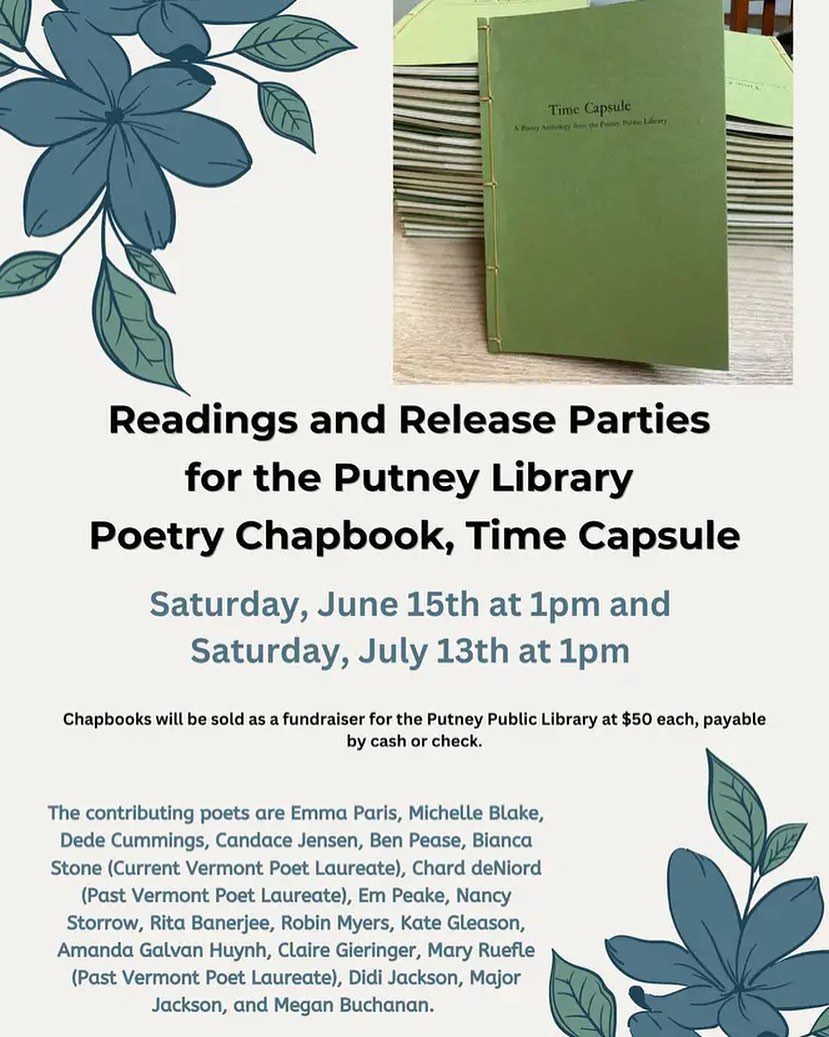
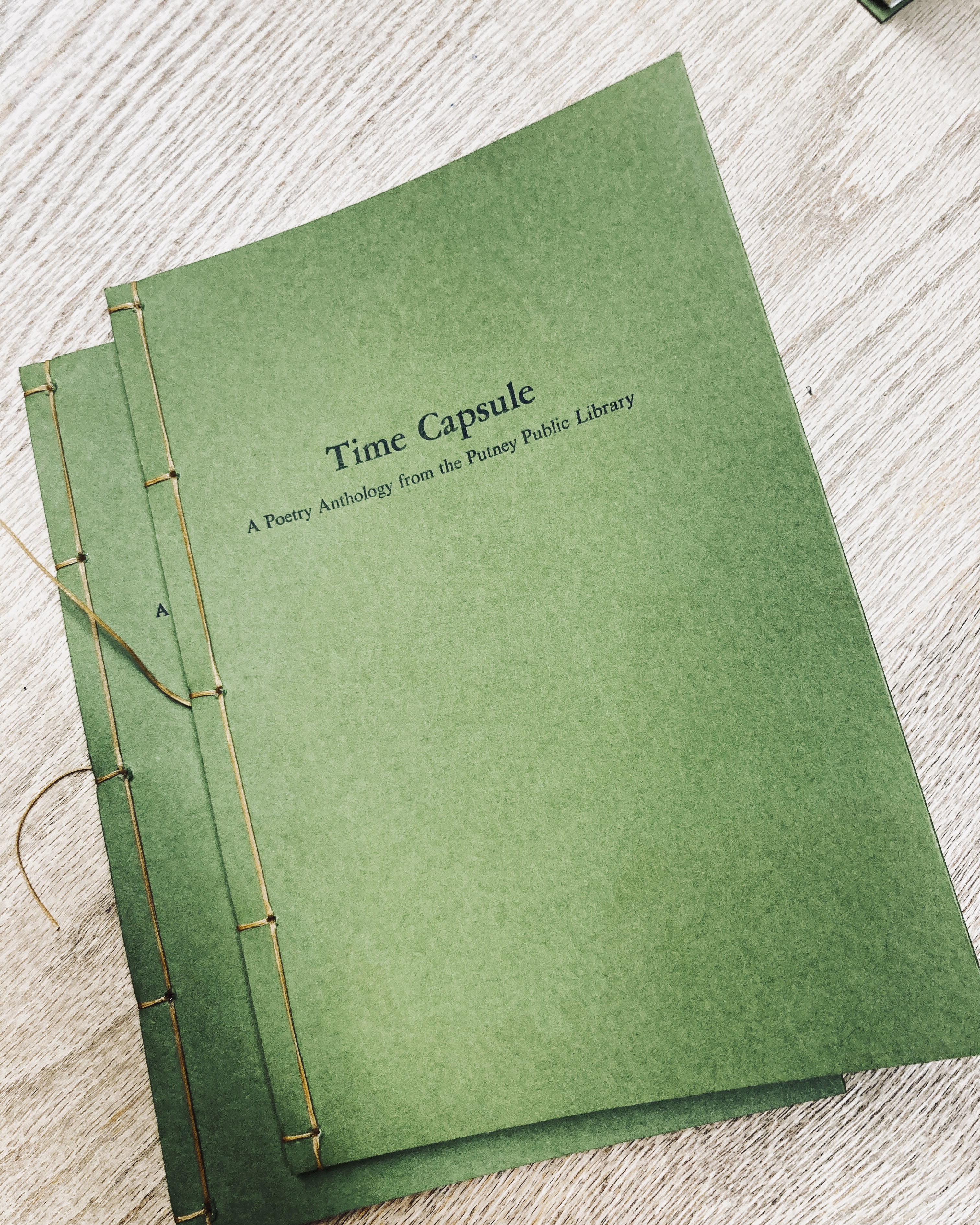
“Time Capsule” Poetry Anthology feat. Rita Banerjee debuts at the Putney Public Library in Vermont on June 15, 2024 & July 13, 2024

Rita Banerjee’s Hindi/English poem “एक रात में (One Night)” be part of “Time Capsule,” a collection of poems curated by writer and artist Candace Jensen , Emily Zervas, and Michelle Blake and created on a letterpress at the Ruth Stone House for the Putney Public Library. Some poets featured in the “Time Capsule” anthology include Candace Jensen, Ben Pease, Bianca Stone, Amanda Galvan Huynh, Mary Ruefle, Didi Jackson, Major Jackson, Rita Banerjee, and many others.

The reading and release parties for “Time Capsule” will take place on June 15 and July 13 at 1 pm EST at the Putney Public Library (55 Main Street, Putney, VT 05346). More information about Time Capsule and its book launch can be found in the Brattleboro Reformer here.

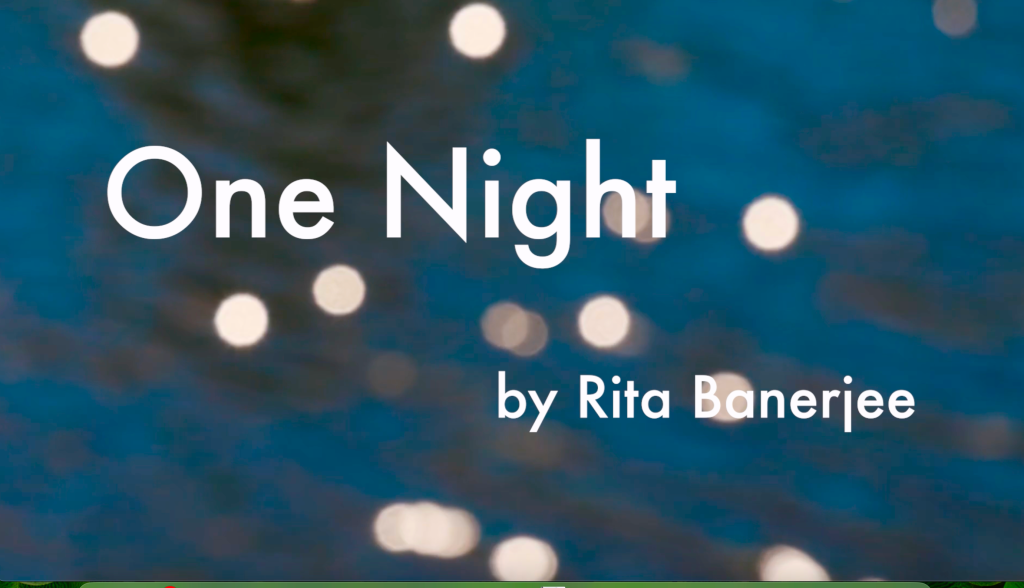
Copies of “Time Capsule” will be available for sale $50 cash or check to raise money for the library! Bigger donations are always welcome of course. The chapbook contents will be available as an eBook and of course available to borrow from the library! Read more about the “Time Capsule” anthology launch on the Putney Public Library website. And a video of the poem “One Night” can be viewed here:


#putneypubliclibrary #putneyvt #Vermont #writers #TimeCapsule #poetry #RitaBanerjee #HindiPoetry #EnglishPoetry

UW Press Celebrates “Aiiieeeee!” and a 50-year Legacy of Asian American Literature feat. Rita Banerjee

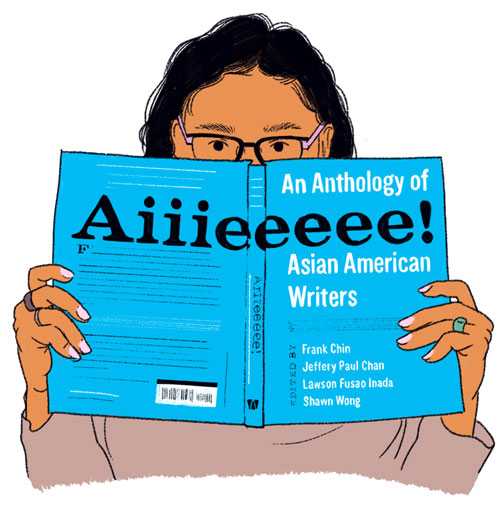
In honor of AANHPI month and the 50th anniversary of its publication, poet and writer Shin Yu Pai writes about the game-changing and inspiring legacy of Aiiieeeee! An Anthology of Asian-American Writers (eds. Frank Chin, Jeffery Paul Chan, Lawson Fusao Inada, and Shawn Wong, 1974) for University of Washington Magazine. In the article, “Finding the Words: UW Press Celebrates Aiiieeeee! and a 50-year Legacy of Asian American Literature,” Pai writes:

In 1970, when Shawn Wong was 19 and a student at the University of California at Berkeley, he had to go hunting for Asian American literature on the street.

An English professor told him no such literature existed. But Wong and his friends and fellow writers, Jeffery Paul Chan, Frank Chin and Lawson Fusao Inada, knew that wasn’t true. They had connected over a shared quest to discover Asian American literature. Their dogged search through Bay Area thrift stores and a handful of literary anthologies led them to 14 writers whose work had been largely ignored by mainstream publishers.

As the young editors continued to refine their list of work by overlooked authors, they decided to create an anthology. Chan brought their fledgling manuscript into the Asian American literature class he was teaching at San Francisco State University, while Wong—who would later join the faculty at the UW—used the material in a class he was teaching at Mills College in nearby Oakland. Eventually, the first-time editors published that group of 14 authors, which included UW alumnus John Okada, ’47, ’51, as well as now well-known wordsmiths Toshio Mori, Oscar Peñaranda and Diana Chang. Their radical undertaking culminated in “Aiiieeeee! An Anthology of Asian-American Writers.” 

This year, “Aiiieeeee!” turns 50. First published by the Howard University Press in 1974, the book was republished in 2019 by the University of Washington Press. The new edition holds a foreword by Tara Fickle, associate professor of Asian American studies at Northwestern University, who offers the current generation of readers context about the era and people involved in bringing the book to life. Fickle studied Wong’s correspondence with the writers and his fellow editors. She also looked at the production notes for the book to understand how the collection evolved through the editorial process and what the stakes were for the editors. Fickle’s research into Wong’s archives unearthed the editors’ own reflections on their project. In a letter to Wong, for example, Inada envisioned the anthology’s success. “Our place in history will have the secure feel of real beginnings. After a while, people will refer to us as the fathers … the cornerstones of our culture.”

Inada’s words held true. “Aiiieeeee!”  became a foundational text in Asian American Literature, and its editors were credited for both rescuing stories out of time and opening readers to a diversity of voices and experiences from the Asian American community. The anthology’s 14 pieces range from the 1940s to the 1970s, ending in a time when activists and scholars were challenging stereotypical representations and expectations of the Asian American voice and experience to highlight neglected perspectives and more freshly define the culture. 

Author and activist Ishmael Reed helped the four writers and would-be editors find their way to the Howard University Press. The Howard editors “were the first to realize the legitimacy of Asian American literature,” Wong says. “It was one of the first 10 books on their list. And it was the only one that wasn’t an African American title.”

Reed dubbed Wong and his friends the “Four Horsemen of Asian-American Literature” and encouraged their efforts to provoke, develop and define an Asian American literary canon. Right away, the book garnered positive reviews in Rolling Stone and The New York Times and advanced Wong and his collaborators along their paths as writers and literary activists.

Today, the UW is steeped in the legacy of their groundbreaking work. A wealth of modern Asian American literary voices includes UW alumni and scholars who studied Asian American literature, English literature and ethnic cultural studies.

Wong joined the UW faculty in 1984, after teaching at Mills College, UC Santa Cruz and San Francisco State. He is currently a professor in the English department and has served as chair of English, director of the Creative Writing Program, director of the University Honors Program and faculty in Cinema & Media Studies.

“The UW has always been a place where you can reinvent yourself,” says Wong. “It’s large enough that I could try different things and bring my perspective to lots of different fields.”

Alongside Wong’s legacy, the University of Washington Press has its own long history of engaging contemporary scholars in republishing and recontextualizing Asian American classics for new generations of readers. It also has a long-standing commitment to supporting Asian American scholarship dating to the early 1970s when editor-in-chief Naomi Pascale saw an opportunity to position the press at the forefront of the discipline. In 1973, the press republished Filipino novelist Carlos Bulosan’s “America Is in the Heart.” Over her decades-long career at the UW Press, Pascale acquired many other titles in this area, including Jade Snow Wong’s “Fifth Chinese Daughter” and Janice Mirikitani’s “Awake in the River and Shedding Silence.”

When Nicole Mitchell became publisher of the press in 2012, she led the redesign and refresh of its Asian American classics series and invited contemporary writers and scholars to develop introductions for these new editions. The UW Press also has published titles from UW faculty across disciplines. “Becoming Nisei,” by professors Lisa Hoffman in the School of Urban Studies and Mary Hanneman, ’91, of the School of Interdisciplinary Arts and Sciences, looks at Japanese Americans in Tacoma before World War II. Professor Stephen Sumida’s “And the View from the Shore” explores the literary traditions of Hawai’i. The press also has supported prominent Northwest-based Asian American writers including Frank Abe, Peter Bacho, ’74, and Cindy Domingo.

In 2020, Shawn Wong established the Shawn Wong Book Fund at the UW Press to recover forgotten titles, like Louis Chu’s “Eat a Bowl of Tea,” and bring them back into print for the wider public. The newest title in Wong’s series is Willyce Kim’s “Dancer Dawkins and the California Kid”—the first Asian American lesbian novel.

Rising scholars and talented writers are drawn to the UW’s English Ph.D. program. Poet and writer E.J. Koh, ’23, won the Washington State Book Award for her memoir, “The Magical Language of Others.” Her novel, “The Liberators,” was released last fall. At the UW, Koh studied Korean American literature, history and film. Rita Banerjee’s, ’06, recent contemplation on female cool, “The Female Gaze,” was featured in “The Best American Essays” last year. And in her new memoir, “Meet Me Tonight in Atlantic City,” Jane Wong, ’16, writes of finding in the literature of other Asian American artists ways to tell her own story… Today is a new day for underrepresented voices, and Asian American literature is flourishing with fresh new voices… Today is a new day for underrepresented voices, and Asian American literature is flourishing with fresh new voices.

You can read Shin Yu Pai’s full article here.

University of Washington’s Presidential Blog Celebrating AANHPI Communities feat. Rita Banerjee

In honor of AANHPI month, University of Washington President Ana Mari Cauce’s recently honored the legacy and impact Asian American, Native Hawaiian, and Pacific Islander communities at the University of Washington in her Presidential Blog. President Cauce writes:

Each May, the nation and our UW community are proud to honor National Asian American, Native Hawaiian and Pacific Islander (AANHPI) Heritage Month and to recognize the enormous impact and influence of our AANHPI community members here on campus and across the globe.

Connections to our Asian American (AA) and Native Hawaiian and Pacific Islander (NHPI) communities run deep at the University of Washington and across the Pacific Northwest. This year’s theme, “Advancing Leaders through Innovation,” offers a terrific lens through which to celebrate the significant role these diverse communities have had in the shaping of America, each through their own language, heritage and culture…

We also celebrate artists like UW Bothell artist-in-residence Anida Yoeu Ali, whose current debut solo show “Hybrid Skin, Mythical Presence” marks Seattle Asian Art Museum’s first exhibition by a Cambodian American artist. And the work of Native Hawaiian astrophysicist Brittany Kamai, cofounder of the Society of Indigenous Physicists (SIP), whose UW course, Pacific Indigenous Astrophysics, focuses uniquely on Indigenous navigation and is available to all UW students.

UW alumni include many talented creators from the AANHPI diaspora, as well, including Washington State Book Award winner E.J. Koh (’23) and Rita Banerjee (’06), whose essay “The Female Gaze,” explores the concept of keeping one’s cool as a woman of color.

This year also marks the 50th anniversary of  the publication of “Aiieeeee!” by the UW Press. This foundational compilation of nearly forgotten works by 14 Asian American writers was anthologized by Shawn Wong, now a UW professor of English. For over five decades, the UW Press has been at the forefront of Asian American scholarship, from republishing work by Filipino novelist Carlos Bulosan in 1973 to the establishment of the Classics of Asian American Literature series, which recently published Willyce Kim’s groundbreaking queer novel, “Dancer Dawkins and the California Kid.”

This month of awareness is also a time to re-affirm our commitment to fighting anti-Asian racism and take collective responsibility in battling all forms of hatred, bigotry and discrimination here on campus and beyond. Let’s celebrate AA and NHPI communities and contributions — in May and throughout the year — for how they contribute to the University’s uniquely diverse and beautifully rich tapestry of cultures and identities.

You can read President Cauce’s full blog post here.

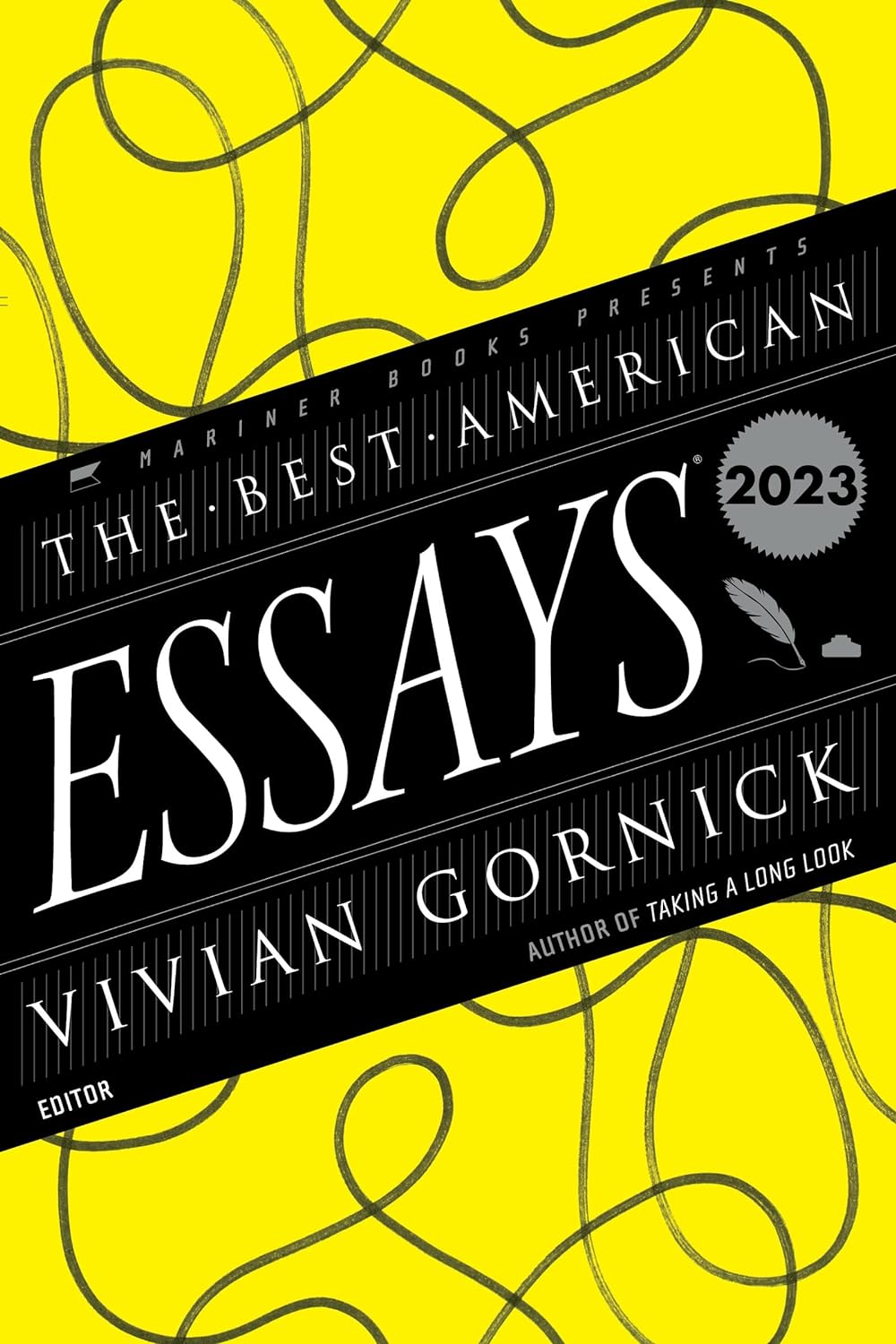
Rita Banerjee’s “The Female Gaze” named a Notable Essay in The Best American Essays 2023

Rita Banerjee’s essay “The Female Gaze,” which was published in PANK Magazine was recently named a Notable Essay in the The Best American Essays 2023 (edited by Vivian Gornick).

Rita Banerjee’s essay in three parts, “The Female Gaze,” is an excerpt from her memoir and manifesto on how young women of color keep their cool against social, sexual, and economic pressure. 

In her essay exploring the female gaze, female agency, and female cool, Banerjee asks: What if women, especially women of color, were the progenitors of cool?  That is, did women have to cultivate their own cool—their own sense of style, creative expression, and coldness—in order to survive patriarchy across millennia across cultures? If the male gaze aims subordinate and colonize, what does the female gaze, tempered by cool, desire?  What does the female gaze cherish or hold dear?  If a woman were fully aware of her gaze, would she use it to objectify and colonize, or could her gaze destabilize and decolonize?

You can read Part 1, Part 2, and Part 3 of “The Female Gaze” on PANK here:
https://pankmagazine.com/2022/01/27/the-female-gaze/
https://pankmagazine.com/2022/02/08/the-female-gaze-pt-ii/
https://pankmagazine.com/2022/04/26/the-female-gaze-pt-iii/

Painted Bride Quarterly’s Podcast, Episode 27 feat. Rita Banerjee’s Poems “Georgia Brown” & “The Suicide Rag”

Painted Bride Quarterly recently reissued some of their classic episodes of the Slushpile Podcast. Episode 27: Suicides and Skeleton Jazz features two of Rita Banerjee’s poems “The Suicide Rag” and “Georgia Brown.”

Check out the Painted Bride hosts editors and writers Kathleen Volk Miller, Marion Wrenn, Jason Schneiderman, Tim Fitts, and Sara Aykit discuss Rita Banerjee’s jazz-inspired poetry on their podcast here. And here’s more information about Episode 27: Suicides and Skeleton Jazz :

This week’s discussion both took us back and made sure that none of us would see the world the same way again. With images of breakdancing, gospel choir, and the not-so-innocent Georgia Brown, we were in it. Whether we’re distinguishing jazz from jazz or figuring out what a clapper is, this episode is filled with risky moves.

Join us in the campaign to have your local library carry lesser-known authors and small presses. Let us know what books you’ll be requesting with #getsomebooks! Let’s support libraries, small presses, and the authors who write for them.

Make sure you follow us on Twitter, Facebook, and let us know what you think of this episode with #longandskinny!

More about the author:

RitaBanerjee-NadjaTeinze.jpeg

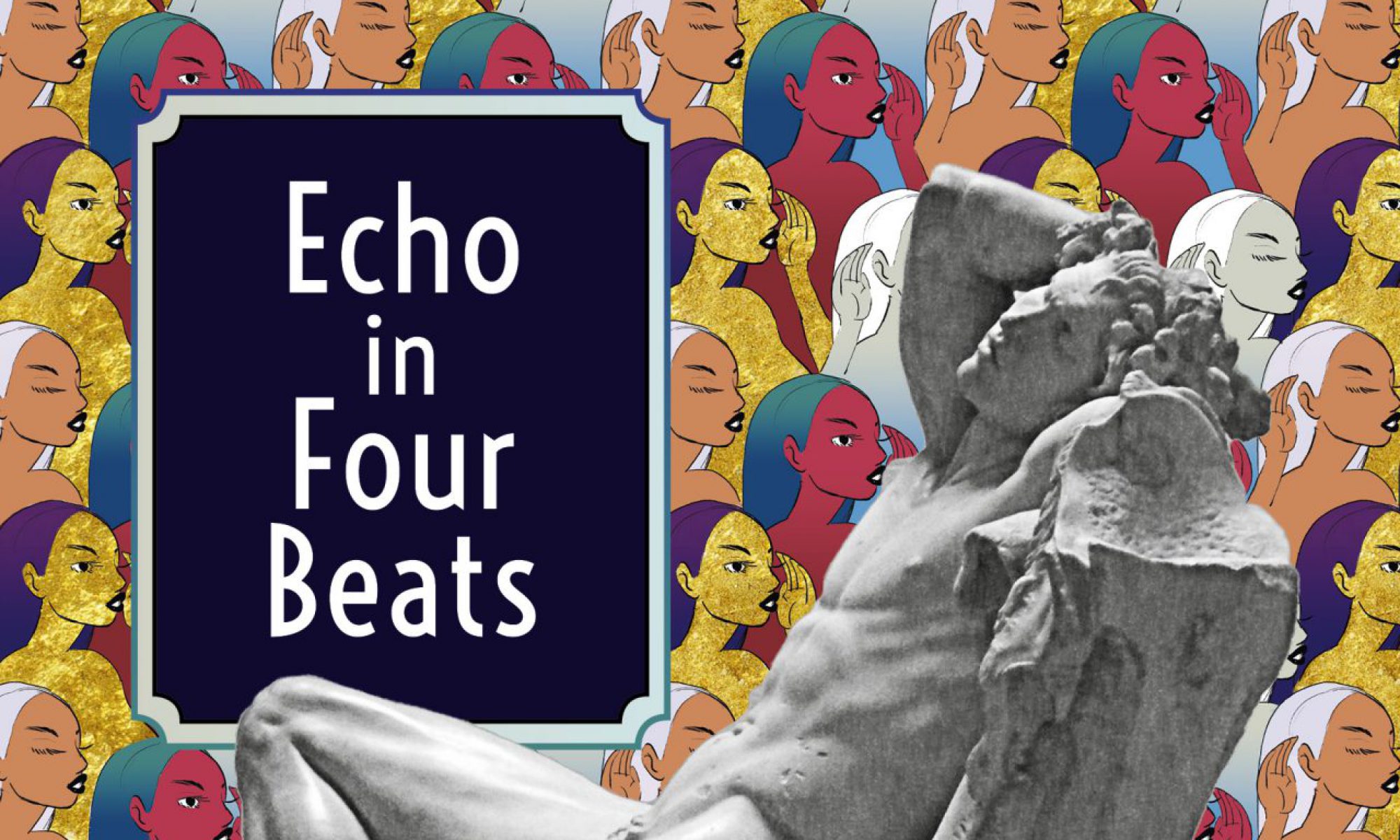
Rita Banerjee is the author of Echo in Four BeatsCREDO: An Anthology of Manifestos and Sourcebook for Creative Writing, the novella “A Night with Kali” in Approaching Footsteps, and Cracklers at Night. She received her doctorate in Comparative Literature from Harvard and her MFA from the University of Washington, and her work appears in Hunger Mountain, PANK, Tupelo Quarterly, Isele Magazine, Nat. Brut., Poets & Writers, Academy of American Poets, Los Angeles Review of Books, Vermont Public Radio, and elsewhere. She is the co-writer of Burning Down the Louvre, a forthcoming documentary film about race, intimacy, and tribalism in the United States and in France, and serves as Senior Editor of the South Asian Avant-Garde and Creative Director of the Cambridge Writers’ Workshop. She received a 2021-2022 Creation Grant from the Vermont Arts Council for her new memoir and manifesto on female cool, and one of the opening chapters of this memoir, “Birth of Cool” was a Notable Essay in the 2020 Best American Essays. She is an Assistant Professor of Creative Writing and Director of the MFA Program for Writers at Warren Wilson College.

Bon Mot Radio feat. Rita Banerjee & Hunger Mountain, Issue 25: Art Saves

Rita Banerjee will be be featured on WGDR Radio’s “Bon Mot” program at 5 pm EST on Sunday, August 20, 2023.  The radio program will air on 91.1 and 91.7 FM Vermont, and can be found in archive here. The show is hosted by Rick Argan and Banerjee will be be reading from her poetry collection Echo in Four Beats and her new memoir manuscript on female cool. The show will also feature readings from Hunger Mountain, Issue 25: Art Saves, which was edited and curated by Erin Stalcup and features poetry, fiction, nonfiction, graphic literature, and hybrid work from the first 25 years of Hunger Mountain literary magazine. The reading also features faculty and students reading from Hunger Mountain: Art Saves from the MFA in Writing & Publishing program at VCFA in Spring 2021. You can listen to the broadcast here.

KCAW Raven Radio’s “The Library Show feat. Rita Banerjee” airs May 7, 2023 – 10:30 am AKDT

During the the Tongass Mist Writing Retreat (April 12-16, 2023) in Sitka, Alaska, Visiting Rita Banerjee sat down with Brooke Shafer, one of the hosts of “The Library Show” on Raven Radio (KCAW, 104.7 FM Sitka, Alaska). Brooke Shafer asked Rita Banerjee about her favorite books, current reads, what drew her to writing, what it’s like to teach creative writing, and the memoir and manifesto on female cool that she currently working on. Banerjee also got a chance to read from “Cool as Kin,” a new chapter from her memoir on-air.

KCAW Raven Radio will be airing Brooke Shafer’s interview and conversation with Rita Banerjee on Sunday, May 7, 10:30 am Alaska Time (2:30 pm EDT, 11:30 am PDT). And you can listen to “The Library Show” broadcast live (or download it) on May 7 on Raven Radio at:

https://www.kcaw.org/program-schedule/