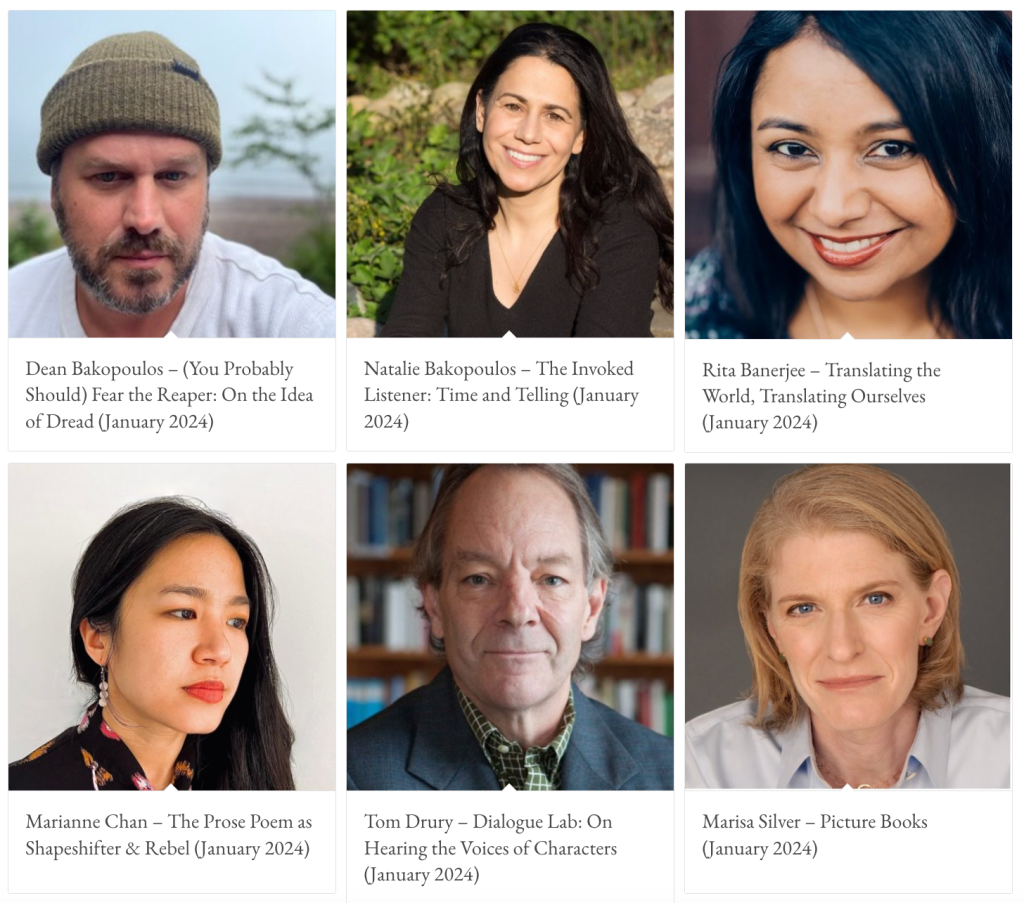
TheMFA Program for Writersat Warren Wilson College recently celebrated its annual summer residency in Swannanoa, NC this July. The residency featured inspiring lectures and classes from both faculty and graduating students. And writers and readers can access the wonderful craft discussions and lectures from the MFA Program for Writers faculty online here. All MFA Store proceeds directly support graduate student scholarships in the MFA Program for Writers.
Rita Banerjee’s Opening Lecture “Writing Towards Psychic Heat,” asks, “When writing towards psychic heat, is the only way out through?” Given the kinds of social traumas a reader and writer may have experienced or witnessed in their lives, this talk offers four alternative craft techniques and strategies that allow writers to write towards significant moments of emotional and psychic tension within their poetry, fiction, and creative nonfiction. Some authors, studied in this talk, who offer an array of strategies to write towards psychic heat include Robert Frost, Brandon Taylor, Roxane Gay, Haruki Murakami, Arundhati Roy, Ocean Vuong, Patrick Rosal, Carmen Maria Machado, Rainer Maria Rilke, Alokeranjan Dasgupta, Jibanananda Das, Subhas Mukhopadhyay, Gillian Flynn, and Marcel Proust.
The Warren Wilson MFA Program for Writers store features a rich archive of faculty lectures and craft discussions from January 1992 – July 2025, and can be accessed here: warrenwilsonmfa.org/store/
TheMFA Program for Writers recently celebrated its annual winter residency at the Blue Ridge Assembly, the site of the original Black Mountain College in Black Mountain, North Carolina. The residency featured inspiring lectures and classes from both faculty and graduating students. And writers and readers can access the wonderful craft discussions and lectures from the MFA Program for Writers faculty online here. Rita Banerjee’s Opening Lecture, “Translating the World, Translating Ourselves,” explores why translation is such a vital aesthetic, psychic, and embodied craft tool for creative writers. In translating our experiences and ourselves onto the page, we as writers become more aware of the metaphors we live by and can ask ourselves “What is the story behind my story, essay, or poem?” Some authors studied in the talk include Basho, Agyeya, Allen Ginsberg, Elizabeth Bishop, Rudyard Kipling, James Baldwin, Yoko Tawada, and Jhumpa Lahiri.
The Warren Wilson MFA Program for Writers store features a rich archive of faculty lectures and craft discussions from January 1992 – January 2024, and can be accessed here: https://www.wwcmfa.org/store/
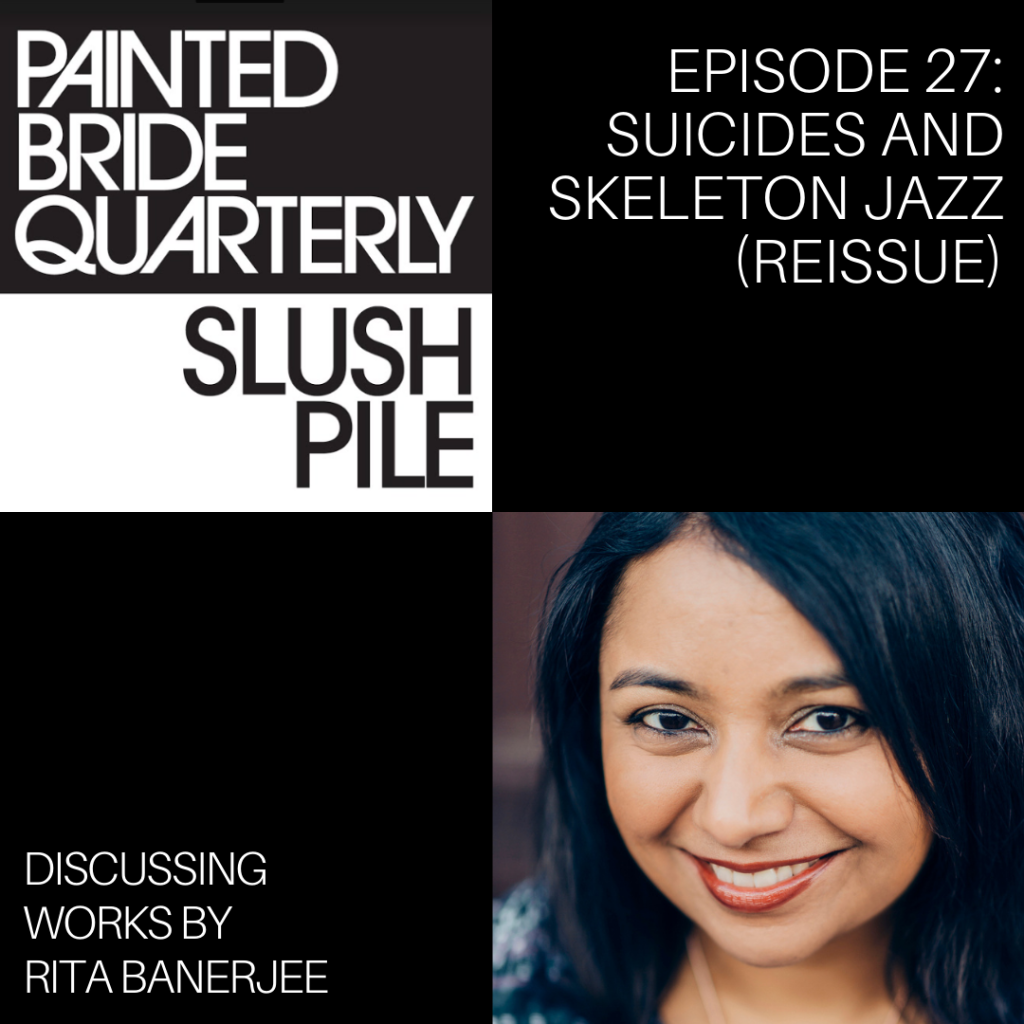
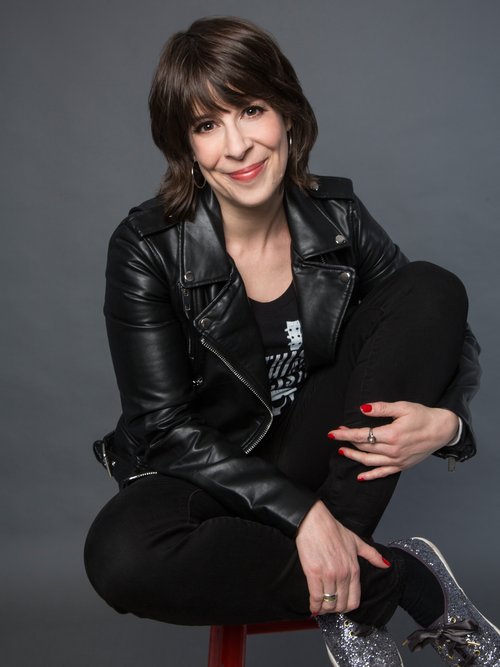
Check out the Painted Bride hosts editors and writers Kathleen Volk Miller, Marion Wrenn, Jason Schneiderman, Tim Fitts, and Sara Aykit discuss Rita Banerjee’s jazz-inspired poetry on their podcast here. And here’s more information about Episode 27: Suicides and Skeleton Jazz :
This week’s discussion both took us back and made sure that none of us would see the world the same way again. With images of breakdancing, gospel choir, and the not-so-innocent Georgia Brown, we were in it. Whether we’re distinguishing jazz from jazz or figuring out what a clapper is, this episode is filled with risky moves.
Join us in the campaign to have your local library carry lesser-known authors and small presses. Let us know what books you’ll be requesting with #getsomebooks! Let’s support libraries, small presses, and the authors who write for them.
Make sure you follow us on Twitter, Facebook, and let us know what you think of this episode with #longandskinny!
More about the author:
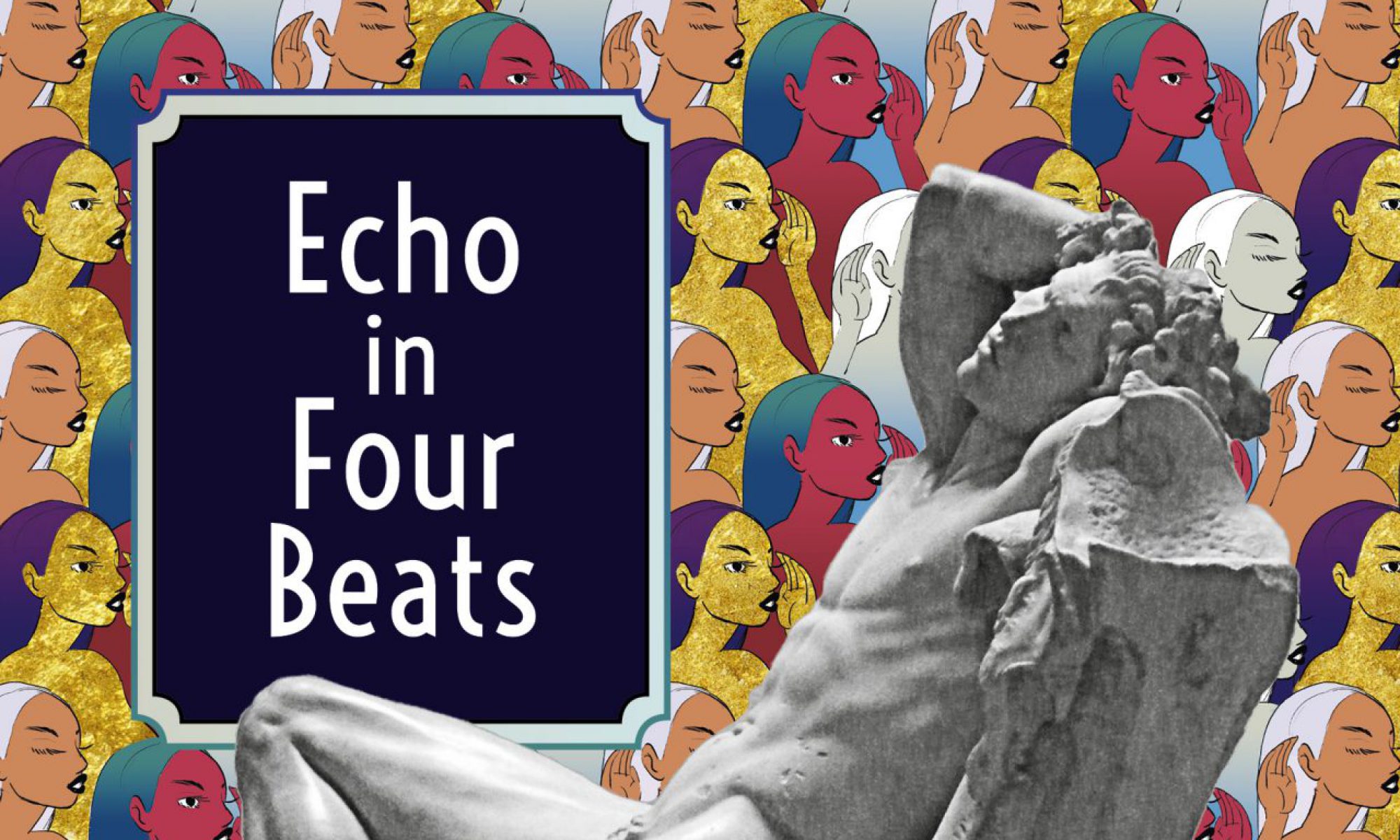
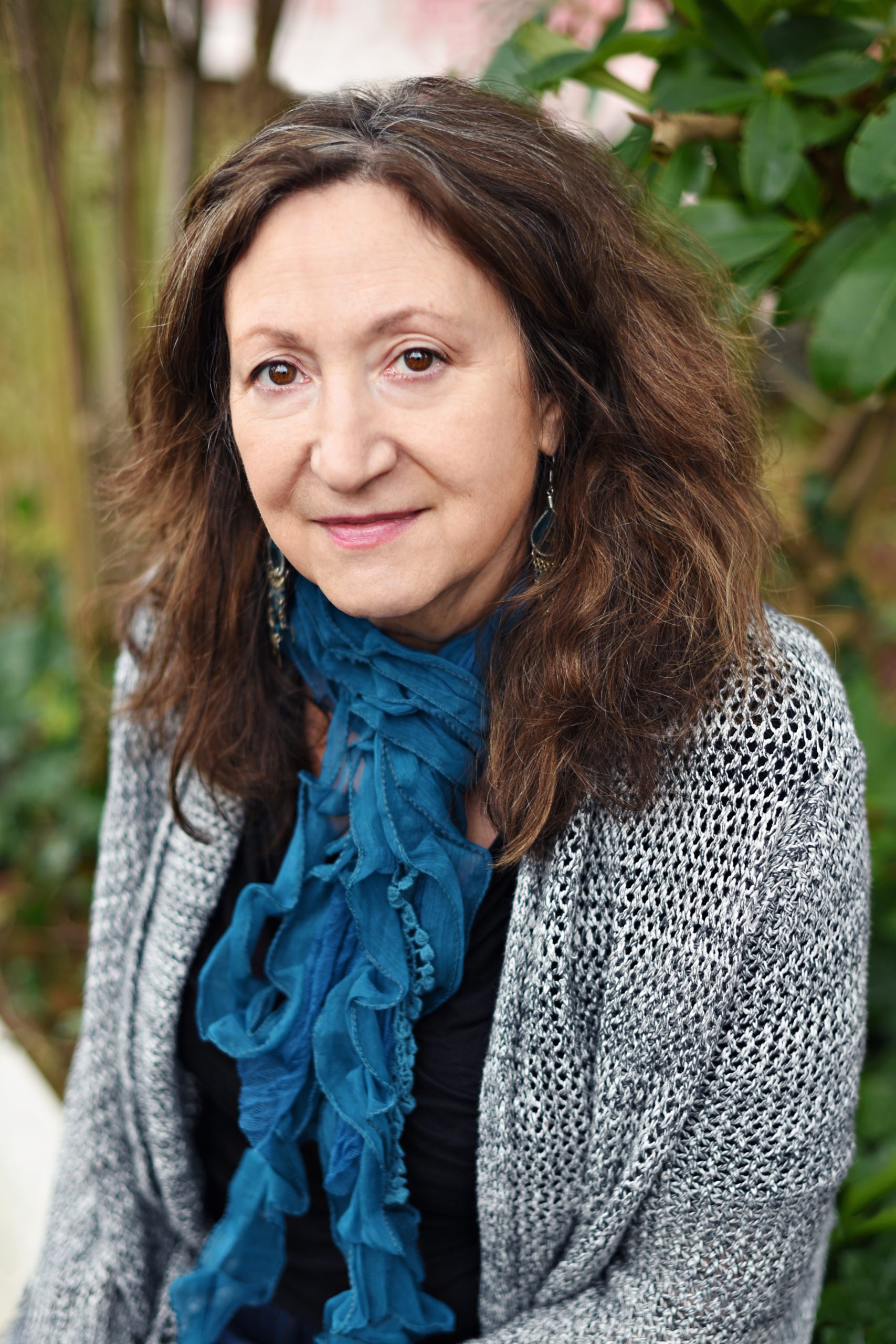
Rita Banerjee is the author of Echo in Four Beats, CREDO: An Anthology of Manifestos and Sourcebook for Creative Writing, the novella “A Night with Kali” in Approaching Footsteps, and Cracklers at Night. She received her doctorate in Comparative Literature from Harvard and her MFA from the University of Washington, and her work appears in Hunger Mountain, PANK, Tupelo Quarterly, Isele Magazine, Nat. Brut., Poets & Writers, Academy of American Poets, Los Angeles Review of Books, Vermont Public Radio, and elsewhere. She is the co-writer of Burning Down the Louvre, a forthcoming documentary film about race, intimacy, and tribalism in the United States and in France, and serves as Senior Editor of the South Asian Avant-Garde and Creative Director of the Cambridge Writers’ Workshop. She received a 2021-2022 Creation Grant from the Vermont Arts Council for her new memoir and manifesto on female cool, and one of the opening chapters of this memoir, “Birth of Cool” was a Notable Essay in the 2020 Best American Essays. She is an Assistant Professor of Creative Writing and Director of the MFA Program for Writers at Warren Wilson College.
Rita Banerjee will be be featured on WGDR Radio’s “Bon Mot” program at 5 pm EST on Sunday, August 20, 2023. The radio program will air on 91.1 and 91.7 FM Vermont, and can be found in archive here. The show is hosted by Rick Argan and Banerjee will be be reading from her poetry collection Echo in Four Beats and her new memoir manuscript on female cool. The show will also feature readings from Hunger Mountain, Issue 25: Art Saves, which was edited and curated by Erin Stalcup and features poetry, fiction, nonfiction, graphic literature, and hybrid work from the first 25 years of Hunger Mountain literary magazine. The reading also features faculty and students reading from Hunger Mountain: Art Saves from the MFA in Writing & Publishing program at VCFA in Spring 2021. You can listen to the broadcast here.
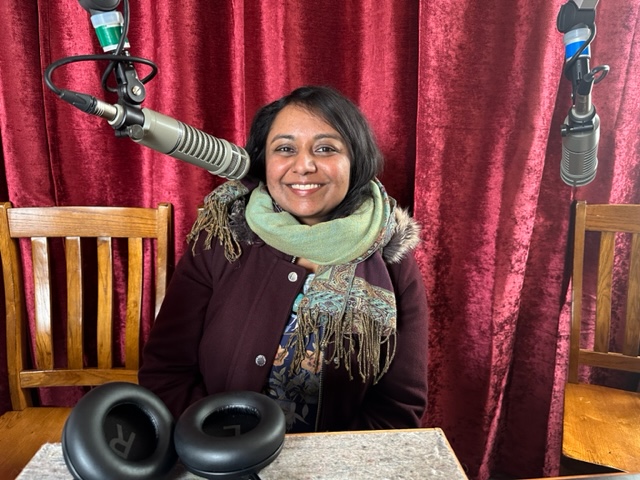
During the the Tongass Mist Writing Retreat (April 12-16, 2023) in Sitka, Alaska, Visiting Rita Banerjee sat down with Brooke Shafer, one of the hosts of “The Library Show” on Raven Radio (KCAW, 104.7 FM Sitka, Alaska). Brooke Shafer asked Rita Banerjee about her favorite books, current reads, what drew her to writing, what it’s like to teach creative writing, and the memoir and manifesto on female cool that she currently working on. Banerjee also got a chance to read from “Cool as Kin,” a new chapter from her memoir on-air.
KCAW Raven Radio will be airing Brooke Shafer’s interview and conversation with Rita Banerjee on Sunday, May 7, 10:30 am Alaska Time (2:30 pm EDT, 11:30 am PDT). And you can listen to “The Library Show” broadcast live (or download it) on May 7 on Raven Radio at:
Recently Rita Banerjee sat down to Felicia Rose Chavez to discuss her pedagogy-changing book The Anti-Racist Writing Workshop: How to Decolonize the Creative Classroom for Kweli Journal. Launched in December 2009, Kweli is an online literary journal that celebrates community and cultural kinships. In this shared space, you will hear the lived experience of people of color. Our many stories. Our shared histories. Our creative play with language. Here our memories are wrapped inside the music of the Muscogee, the blues songs of the South, the clipped patois of the Caribbean. We currently publish four (4) online issues each year. In the interview and podcast (produced by Tavia Gilbert), Rita Banerjee and Felicia Rose Chavez discuss new approaches to the creative writing classroom. Here is an excerpt from their interview:
Rita Banerjee:
To me, it sounds like this anti-racist workshop model is neither a call-out culture or a call-in culture, but much more curious, inquisitive, and dialogue-based. It’s questioning, but not in an interrogating style.
Felicia Rose Chavez:
It’s about “what are you trying to do, and how can we best get you there?”
Rita Banerjee:
I would love for you to talk about the way that you utilize the Liz Lerman method. Because the one that I’ve been taught the moderator has a really big role in helping navigate the conversation. But in your model, it’s the artist is the one who’s really propelling the conversation forward.
Felicia Rose Chavez:
Yeah. I go to the extreme where students are seated in a circle to workshop when it comes to formal workshop and I’m actually seated outside of the circle. So I will be in the corner of the classroom. I’m not even participating as a restraint to myself because my impulse would be to turn towards dominance and control of the classroom. I’m not immune to these impulses as an educator. It takes great work for me to step back and say, “that’s not warranted right now. Nobody cares what you think right now, let them learn from one another.” So I do advocate that the student is the one who leads the workshop. They have a timing device and they walk their fellow students through the five steps of the Liz Lerman model in which I add a kind of unspoken sixth step in which they write an artist statement to the group.
So they write a letter, and they write about their fears about the piece they write about their successes of the piece. They write things like “God guys, I am dying right now. And I don’t know what to do when I feel so vulnerable. And so here’s what I need in this moment.” They also have an opportunity to articulate a future draft, saying things like “Here’s where I want to be. Here’s what I need to get there.” They enumerate three craft-based questions. Again, we all understand what those craft terms are. So we’re all speaking to the piece and we can engage with those craft concepts on equal footing that serves as their foundation. And so they have about 30 minutes and they read the piece aloud. Everyone reads the artist statement silently. They read the piece aloud and they’re able to walk through the Liz Lerman steps beginning with “I welcome your statements of meaning” and everyone offers what was challenging and beautiful and exciting to them.
Felicia Rose Chavez is an award-winning educator with an MFA in Creative Nonfiction from the University of Iowa. She is author of The Anti-Racist Writing Workshop: How to Decolonize the Creative Classroom and co-editor of The BreakBeat Poets Volume 4: LatiNEXT with Willie Perdomo and Jose Olivarez. Felicia’s teaching career began in Chicago, where she served as Program Director to Young Chicago Authors and founded GirlSpeak, a feminist webzine for high school students. She went on to teach writing at the University of New Mexico, where she was distinguished as the Most Innovative Instructor of the Year, th University of Iowa, where she was distinguished as the Outstanding Instructor of the Year, and Colorado College, where she received the Theodore Roosevelt Collins Outstanding Faculty Award. Her creative scholarship earned her a Ronald E. McNair Fellowship, a University of Iowa Graduate Dean’s Fellowship, a Riley Scholar Fellowship, and a Hadley Creatives Fellowship. Originally from Albuquerque, New Mexico, she currently serves as the Bronfman Creativity and Innovation Scholar-in-Residence at Colorado College. For more information about The Anti-Racist Writing Workshop, and to access (and add to!) a multi-genre compilation of contemporary writers of color, visit www.antiracistworkshop.com.
Rita Banerjeeis an Assistant Professor of Creative Writing and Co-Director of the MFA in Creative Writing and Publishing program at the George Polk School of Communications at Long Island University Brooklyn. She is author of CREDO: An Anthology of Manifestos and Sourcebook for Creative Writing, Echo in Four Beats, the novella “A Night with Kali” in Approaching Footsteps, and Cracklers at Night. She received her doctorate in Comparative Literature from Harvard and her MFA from the University of Washington, and her work appears in Hunger Mountain, PANK, Isele, Nat. Brut., Poets & Writers, Academy of American Poets, Los Angeles Review of Books, Vermont Public Radio, and elsewhere. She is the co-writer and co-director of Burning Down the Louvre (2022), a documentary film about race, intimacy, and tribalism in the United States and in France. She received a 2021-2022 Creation Grant from the Vermont Arts Council for her new memoir and manifesto on female cool, and one of the opening chapters of this memoir, “Birth of Cool” was a Notable Essay in the 2020 Best American Essays. You can follow her work at ritabanerjee.com or on Twitter @Rita_Banerjee.
Writer, performer, producer Tavia Gilbertis the acclaimed narrator of more than 700 full-cast and multi-voice audiobooks. She is a Grammy nominee, Booklist Audiobook Narrator of the Year, the recipient of dozens of Earphones Awards, and a 12-time Audie nominee and Winner of the Best Female Narrator Audie. She produces several podcasts, including eight-time award-winner Stories of Impact, and teaches at Long Island University and Vermont College of Fine Arts.
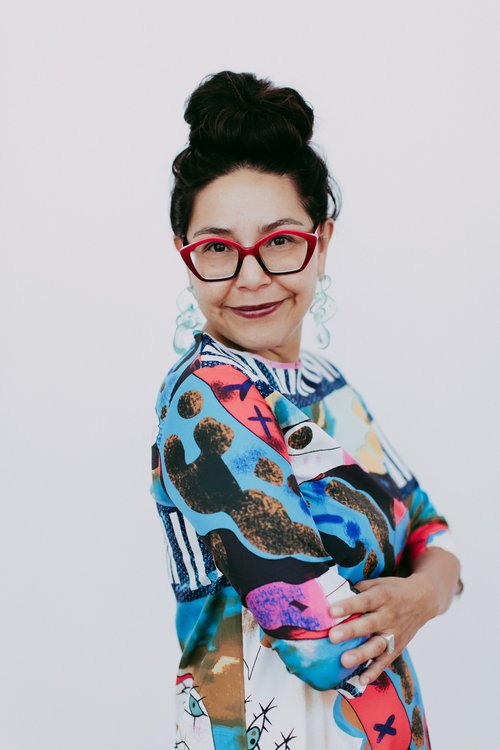
Visual artist and poet Shanta Lee Gander and multi-genre author Rita Banerjee sit down to talk about creativity, writing across genres, knitting, music & jamming, and what sparks joy during the pandemic in Shanta Lee Gander’s new podcast from her new series “YET…Conversations About Bringing Art Into the World.”
This premiere podcast from the latest issue of “YET…Conversations About Bringing Art Into the World,” a monthly newsletter that offers a behind-the-scenes of creating as we talk with creatives around the world. The January issue features Rita Banerjee who is a writer across many different genres including her work on an upcoming documentary, Burning Down the Louvre. In our first audio interview, Shanta Lee talks with Rita about the things that take hold of us and call us to create, some details about what it has been like to branch out into documentary filmmaking, how to continue to keep the fire going when one creates across so many different areas, and more. To learn more about the newsletter or sign up, visit: Shantaleegander.com.
About the authors:
Shanta Lee Gander is a visual artist, poet, and prose writer based in Vermont. She is co-author with her husband MacLean C. Gander of Ghosts of Cuba: An Interracial Couple’s Exploration of Cuba in the Age of Trump—Told in Images & Words (forthcoming). She has an MBA from the University of Hartford and an undergraduate degree in Women, Gender and Sexuality from Trinity College, and is completing her MFA in Creative Non-Fiction and Poetry at the Vermont College of Fine Arts. Her exhibition Dark Goddess combines cultural anthropology, photography, and an individual’s personal vision as it relates to unearthing deeper aspects of the goddess. The Dark Goddess exhibition was featured at the Southern Vermont Arts Center in Manchester, VT as a solo show from August 7 – September 26, 2021 and will be at the Fleming Museum of Art, February – May 2022.
Rita Banerjee is an Assistant Professor of Creative Writing and Co-Director of the MFA in Creative Writing and Publishing program at LIU Brooklyn. She is the author of CREDO: An Anthology of Manifestos and Sourcebook for Creative Writing, Echo in Four Beats, the novella “A Night with Kali” in Approaching Footsteps, and Cracklers at Night. Her work appears in Hunger Mountain, Isele, Nat. Brut., Poets & Writers, Academy of American Poets, Los Angeles Review of Books, Vermont Public Radio, and elsewhere. She is a co-writer of Burning Down the Louvre (2022), a documentary film about race, intimacy, and tribalism in the United States and in France. She received a 2021-2022 Creation Grant from the Vermont Arts Council for her new memoir and manifesto on female cool, and one of the opening chapters of this new memoir, “Birth of Cool” was a Notable Essay in the 2020 Best American Essays. You can follow her work at ritabanerjee.com or on Twitter @Rita_Banerjee!
Join Director of the Polk School, Robin Hemley, and Co-Director of the MFA in Creative Writing and Publishing, Rita Banerjee, as they engage in a lively discussion in the fifth of the 2021 season’s Polk Professional Series, “How Do I Become You?” The series highlights the career paths and accomplishments of of successful writers, journalists, scientists, adventurers, activists, filmmakers and more, all of whom have made a difference by learning to be powerful communicators and to tell stories that count.
When: Dec 2, 2021 07:00 PM Eastern Time (US and Canada) Topic: POLK INTERVIEW: WITH TORREY PETERS, AUTHOR Zoom Info Here!
Torrey Peters is the author of the novel Detransition, Baby, published by One World/Random House, which was longlisted for the Women’s Prize for Fiction. She is also the author of the novellas Infect Your Friends and Loved Ones and The Masker. She has an MFA from the University of Iowa and a Masters in Comparative Literature from Dartmouth. Torrey rides a pink motorcycle and splits her time between Brooklyn and an off-grid cabin in Vermont.
Join Director of the Polk School, Robin Hemley, and Co-Director of the MFA in Creative Writing and Publishing, Rita Banerjee, as they engage in a lively discussion in the fourth of the 2021 season’s Polk Professional Series, “How Do I Become You?” The series highlights the career paths and accomplishments of of successful writers, journalists, scientists, adventurers, activists, filmmakers and more, all of whom have made a difference by learning to be powerful communicators and to tell stories that count.
David Shieldsis the internationally bestselling author of twenty-three books, including The Very Last Interview(forthcoming from NYRB, March 2022), Reality Hunger (recently named one of the 100 most important books of the last decade by LitHub), The Thing About Life Is That One Day You’ll Be Dead (NYT bestseller), Black Planet (finalist for NBCC award), and Other People: Takes & Mistakes (NYTBR Editors’ Choice). He produced, wrote, and directed, Lynch: A History, a 2019 documentary about Marshawn Lynch’s use of silence, echo, and mimicry as key tools of resistance. Shields’s work has been translated into two dozen languages.
Join Director of the Polk School, Robin Hemley, and Co-Director of the MFA in Creative Writing and Publishing, Rita Banerjee, as they engage in a lively discussion in the third of the 2021 season’s Polk Professional Series, “How Do I Become You?” The series highlights the career path and accomplishments of of successful writers, journalists, scientists, adventurers, activists, filmmakers and more, all of whom have made a difference by learning to be powerful communicators and to tell stories that count.
Today’s discussion will be with science writer and essayist Susanne Paola Antonetta.
Susanne Paola Antonetta’s newest book is The Terrible Unlikelihood of Our Being Here. Forthcoming is The Devil’s Castle. Previous books include Entangled Objects, Make Me a Mother,Curious Atoms,Body Toxic, and A Mind Apart: Travels in a Neurodiverse World. Awards for her writing include a New York Times Notable Book, an American Book Award, a Library Journal Best Science book of the year, an Amazon Top Ten memoir listing, and others. Her work has appeared or been featured in the New York Times, the UK Independent, The New Republic, CNN, and many other publications







 Rita Banerjee