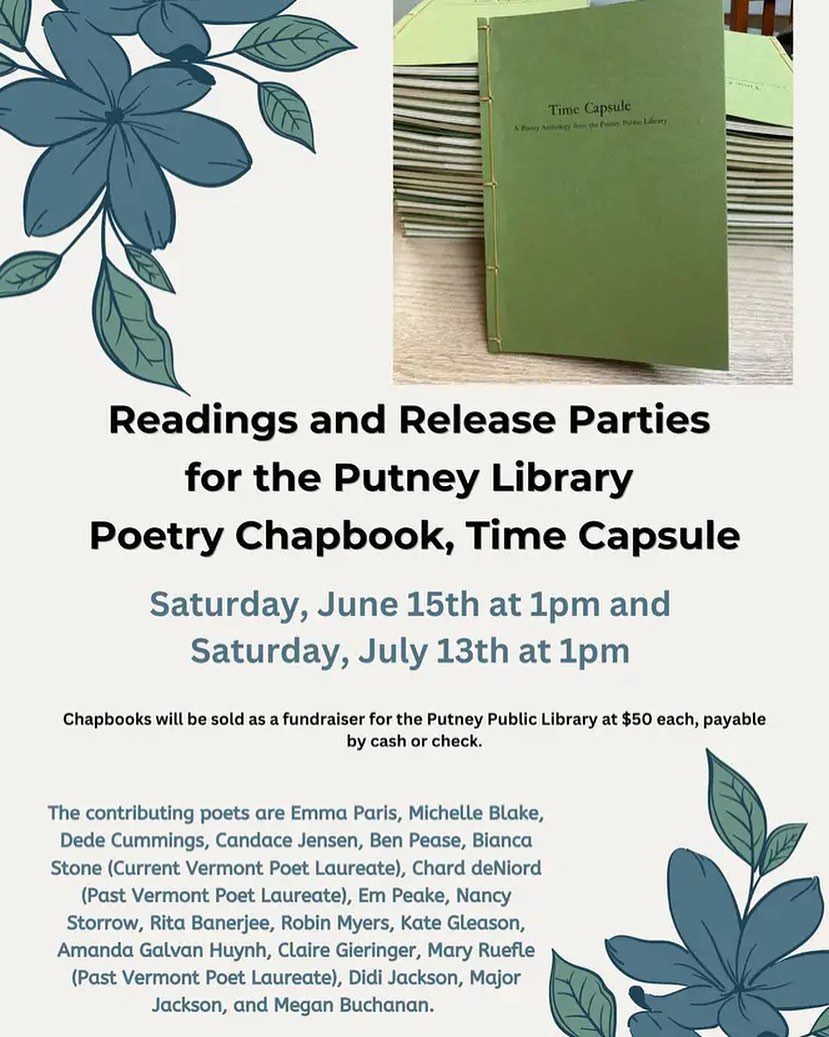
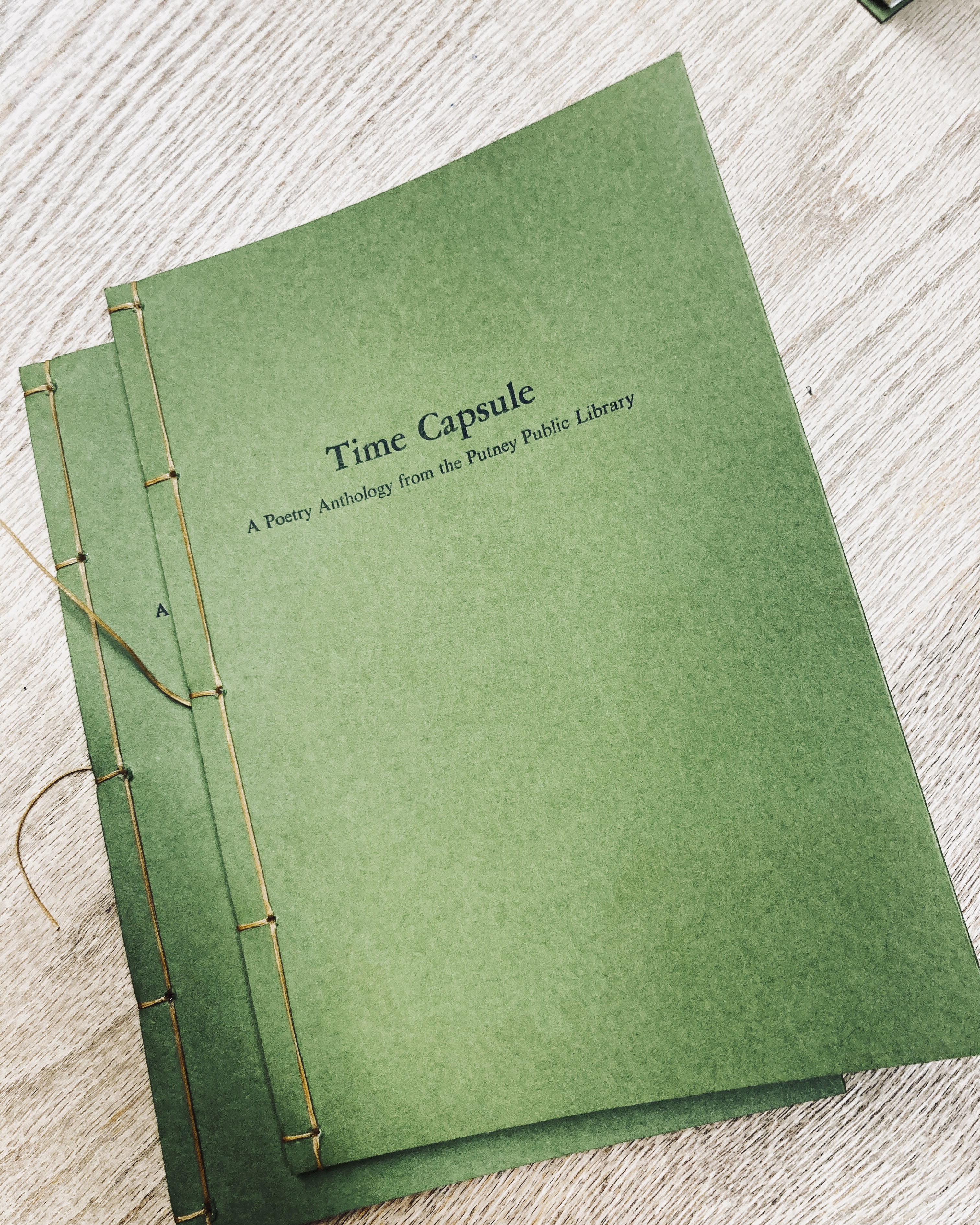
Rita Banerjee’s Hindi/English poem “एक रात में (One Night)” be part of “Time Capsule,” a collection of poems curated by writer and artist Candace Jensen , Emily Zervas, and Michelle Blake and created on a letterpress at the Ruth Stone House for the Putney Public Library. Some poets featured in the “Time Capsule” anthology include Candace Jensen, Ben Pease, Bianca Stone, Amanda Galvan Huynh, Mary Ruefle, Didi Jackson, Major Jackson, Rita Banerjee, and many others.
The reading and release parties for “Time Capsule” will take place on June 15 and July 13 at 1 pm EST at the Putney Public Library (55 Main Street, Putney, VT 05346). More information about Time Capsule and its book launch can be found in the Brattleboro Reformer here.
Copies of “Time Capsule” will be available for sale $50 cash or check to raise money for the library! Bigger donations are always welcome of course. The chapbook contents will be available as an eBook and of course available to borrow from the library! Read more about the “Time Capsule” anthology launch on the Putney Public Library website. And a video of the poem “One Night” can be viewed here:
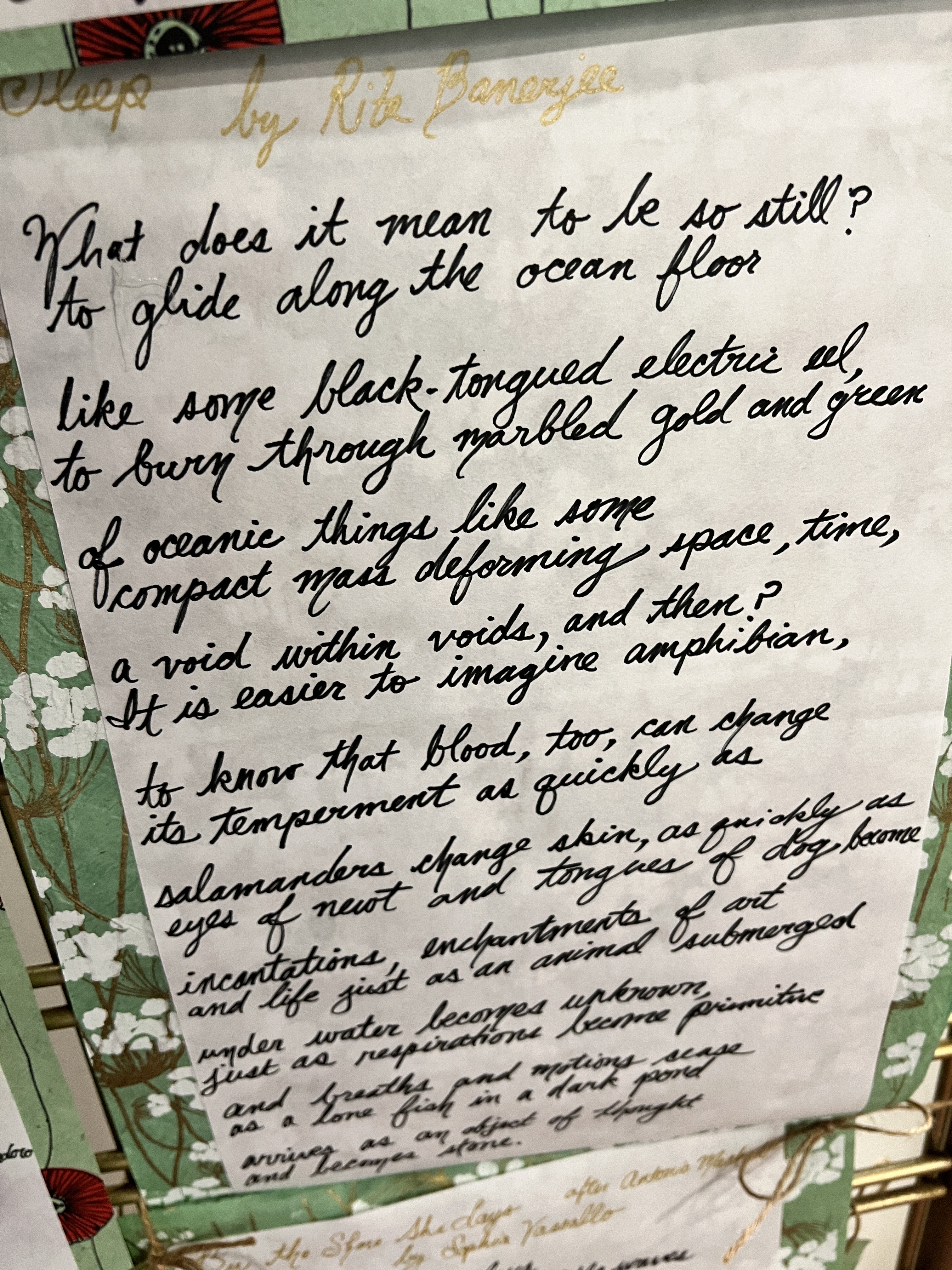
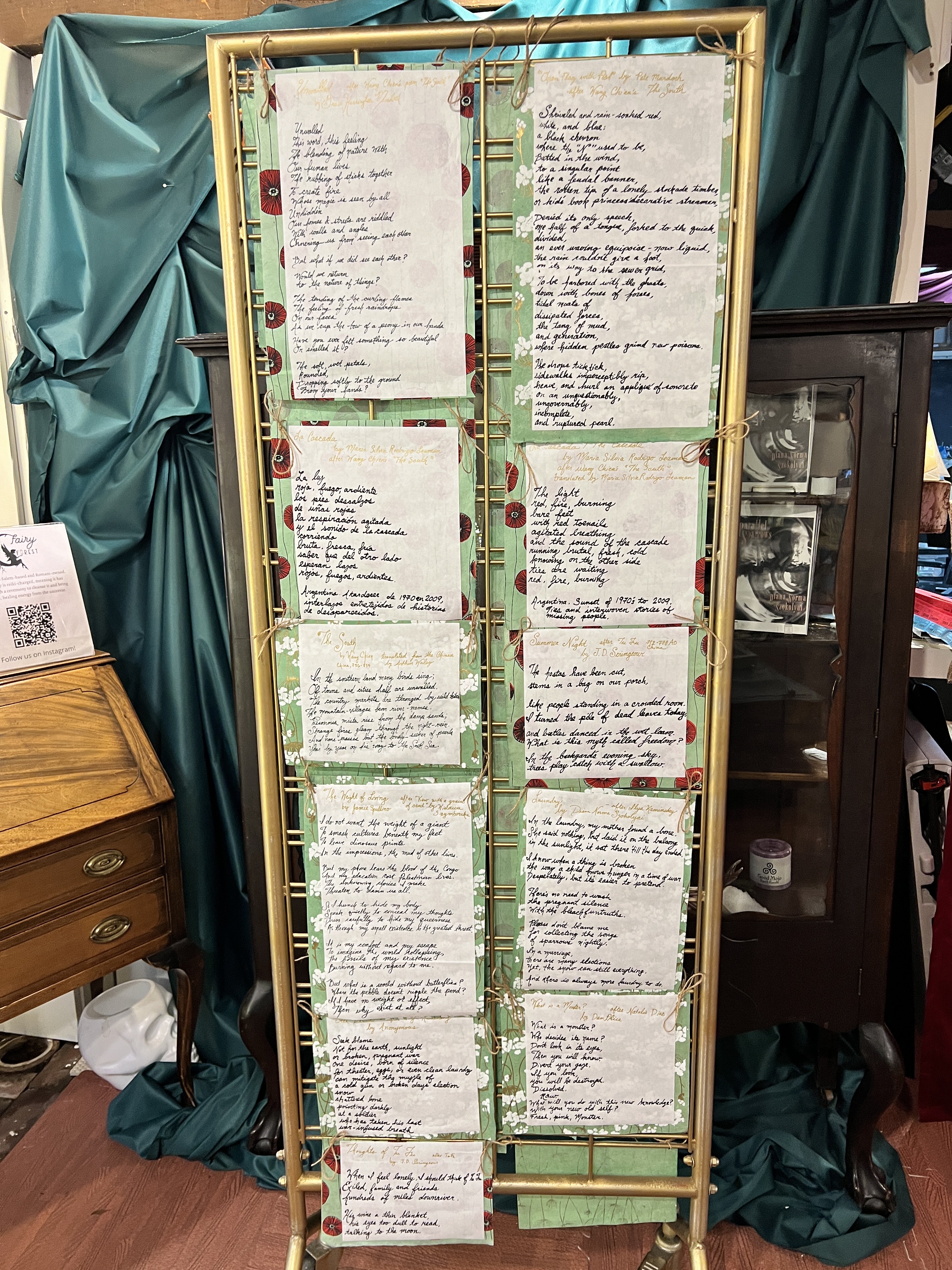
Rita Banerjee’s poem “Sleep” is featured in “Bijou” Opening Reception at the 2024 Salem Arts Festival from June 7, 2024 – July 31, 2024. The “Bijou” World Poetry Collection is curated by poet Diana Norma Szokolyai and the Chagall Performing Arts Collaborative. You can visit the”Bijou” exhibit at the ChagallPAC / Cambridge Writers’ Workshop Studio at Artist’s Row, 24 New Derby Street, Salem, MA 01970 USA this weekend! More info follows below:
Join us on June 7, 2024 from 7-9 pm ESTfor our Opening Reception for “Bijou,” with live music and mingling.
ChagallPAC is delighted to announce a group exhibition titled “Bijou,” featuring the visual works of Ray Gilbert, Rachel Redux, Zenovia, Osmar K de Leon, Salem Fairy Forest, Diana Norma Sozokolyai, and Holy Crow. This exhibition will run from June 7 – July 31, 2024. Our opening Reception on June 7th will feature some of our artists in attendance, and live music by Victor Pachas.
BIJOU is desirable, sought-after, elegant. A jewel, a trinket, a treasure. Shaped by fingers, ornamental, delicate, prized workmanship. From haunting photos, dreamlike paintings, and bejeweled shrines, the selected works are modern treasure. Rare, handmade, and elegant.
Poets in Exhibition: Anonymous Rita Banerjee Shari Caplan Wang Chien Grace Harrington Murdoch Pete Murdoch Nancy Pantano Corrine Previte J.D. Scrimgeour Diana Norma Szokolyai Jezmina von Thiele Sophia Vassallo Dan Rice Jamie Spallino Maria Silvia Rodrigo Leaman
In 1970, when Shawn Wong was 19 and a student at the University of California at Berkeley, he had to go hunting for Asian American literature on the street.
An English professor told him no such literature existed. But Wong and his friends and fellow writers, Jeffery Paul Chan, Frank Chin and Lawson Fusao Inada, knew that wasn’t true. They had connected over a shared quest to discover Asian American literature. Their dogged search through Bay Area thrift stores and a handful of literary anthologies led them to 14 writers whose work had been largely ignored by mainstream publishers.
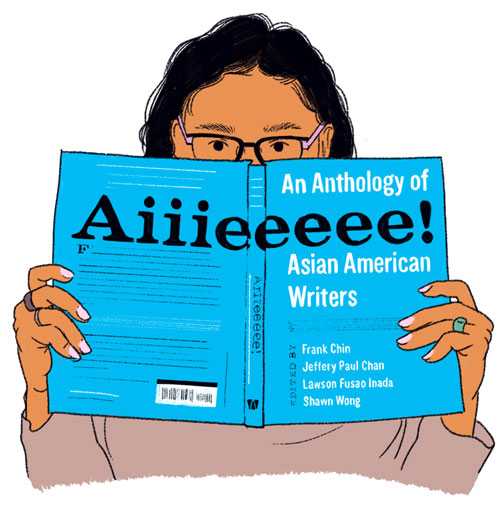
As the young editors continued to refine their list of work by overlooked authors, they decided to create an anthology. Chan brought their fledgling manuscript into the Asian American literature class he was teaching at San Francisco State University, while Wong—who would later join the faculty at the UW—used the material in a class he was teaching at Mills College in nearby Oakland. Eventually, the first-time editors published that group of 14 authors, which included UW alumnus John Okada, ’47, ’51, as well as now well-known wordsmiths Toshio Mori, Oscar Peñaranda and Diana Chang. Their radical undertaking culminated in “Aiiieeeee! An Anthology of Asian-American Writers.”
This year, “Aiiieeeee!” turns 50. First published by the Howard University Press in 1974, the book was republished in 2019 by the University of Washington Press. The new edition holds a foreword by Tara Fickle, associate professor of Asian American studies at Northwestern University, who offers the current generation of readers context about the era and people involved in bringing the book to life. Fickle studied Wong’s correspondence with the writers and his fellow editors. She also looked at the production notes for the book to understand how the collection evolved through the editorial process and what the stakes were for the editors. Fickle’s research into Wong’s archives unearthed the editors’ own reflections on their project. In a letter to Wong, for example, Inada envisioned the anthology’s success. “Our place in history will have the secure feel of real beginnings. After a while, people will refer to us as the fathers … the cornerstones of our culture.”
Inada’s words held true. “Aiiieeeee!” became a foundational text in Asian American Literature, and its editors were credited for both rescuing stories out of time and opening readers to a diversity of voices and experiences from the Asian American community. The anthology’s 14 pieces range from the 1940s to the 1970s, ending in a time when activists and scholars were challenging stereotypical representations and expectations of the Asian American voice and experience to highlight neglected perspectives and more freshly define the culture.
Author and activist Ishmael Reed helped the four writers and would-be editors find their way to the Howard University Press. The Howard editors “were the first to realize the legitimacy of Asian American literature,” Wong says. “It was one of the first 10 books on their list. And it was the only one that wasn’t an African American title.”
Reed dubbed Wong and his friends the “Four Horsemen of Asian-American Literature” and encouraged their efforts to provoke, develop and define an Asian American literary canon. Right away, the book garnered positive reviews in Rolling Stone and The New York Times and advanced Wong and his collaborators along their paths as writers and literary activists.
Today, the UW is steeped in the legacy of their groundbreaking work. A wealth of modern Asian American literary voices includes UW alumni and scholars who studied Asian American literature, English literature and ethnic cultural studies.
Wong joined the UW faculty in 1984, after teaching at Mills College, UC Santa Cruz and San Francisco State. He is currently a professor in the English department and has served as chair of English, director of the Creative Writing Program, director of the University Honors Program and faculty in Cinema & Media Studies.
“The UW has always been a place where you can reinvent yourself,” says Wong. “It’s large enough that I could try different things and bring my perspective to lots of different fields.”
Alongside Wong’s legacy, the University of Washington Press has its own long history of engaging contemporary scholars in republishing and recontextualizing Asian American classics for new generations of readers. It also has a long-standing commitment to supporting Asian American scholarship dating to the early 1970s when editor-in-chief Naomi Pascale saw an opportunity to position the press at the forefront of the discipline. In 1973, the press republished Filipino novelist Carlos Bulosan’s “America Is in the Heart.” Over her decades-long career at the UW Press, Pascale acquired many other titles in this area, including Jade Snow Wong’s “Fifth Chinese Daughter” and Janice Mirikitani’s “Awake in the River and Shedding Silence.”
When Nicole Mitchell became publisher of the press in 2012, she led the redesign and refresh of its Asian American classics series and invited contemporary writers and scholars to develop introductions for these new editions. The UW Press also has published titles from UW faculty across disciplines. “Becoming Nisei,” by professors Lisa Hoffman in the School of Urban Studies and Mary Hanneman, ’91, of the School of Interdisciplinary Arts and Sciences, looks at Japanese Americans in Tacoma before World War II. Professor Stephen Sumida’s “And the View from the Shore” explores the literary traditions of Hawai’i. The press also has supported prominent Northwest-based Asian American writers including Frank Abe, Peter Bacho, ’74, and Cindy Domingo.
In 2020, Shawn Wong established the Shawn Wong Book Fund at the UW Press to recover forgotten titles, like Louis Chu’s “Eat a Bowl of Tea,” and bring them back into print for the wider public. The newest title in Wong’s series is Willyce Kim’s “Dancer Dawkins and the California Kid”—the first Asian American lesbian novel.
Rising scholars and talented writers are drawn to the UW’s English Ph.D. program. Poet and writer E.J. Koh, ’23, won the Washington State Book Award for her memoir, “The Magical Language of Others.” Her novel, “The Liberators,” was released last fall. At the UW, Koh studied Korean American literature, history and film. Rita Banerjee’s, ’06, recent contemplation on female cool, “The Female Gaze,” was featured in “The Best American Essays” last year. And in her new memoir, “Meet Me Tonight in Atlantic City,” Jane Wong, ’16, writes of finding in the literature of other Asian American artists ways to tell her own story… Today is a new day for underrepresented voices, and Asian American literature is flourishing with fresh new voices… Today is a new day for underrepresented voices, and Asian American literature is flourishing with fresh new voices.
In honor of AANHPI month, University of Washington President Ana Mari Cauce’s recently honored the legacy and impact Asian American, Native Hawaiian, and Pacific Islander communities at the University of Washington in her Presidential Blog. President Cauce writes:
Connections to our Asian American (AA) and Native Hawaiian and Pacific Islander (NHPI) communities run deep at the University of Washington and across the Pacific Northwest. This year’s theme, “Advancing Leaders through Innovation,” offers a terrific lens through which to celebrate the significant role these diverse communities have had in the shaping of America, each through their own language, heritage and culture…
We also celebrate artists like UW Bothell artist-in-residence Anida Yoeu Ali, whose current debut solo show “Hybrid Skin, Mythical Presence” marks Seattle Asian Art Museum’s first exhibition by a Cambodian American artist. And the work of Native Hawaiian astrophysicist Brittany Kamai, cofounder of the Society of Indigenous Physicists (SIP), whose UW course, Pacific Indigenous Astrophysics, focuses uniquely on Indigenous navigation and is available to all UW students.
UW alumni include many talented creators from the AANHPI diaspora, as well, including Washington State Book Award winner E.J. Koh (’23) and Rita Banerjee (’06), whose essay “The Female Gaze,” explores the concept of keeping one’s cool as a woman of color.
This month of awareness is also a time to re-affirm our commitment to fighting anti-Asian racism and take collective responsibility in battling all forms of hatred, bigotry and discrimination here on campus and beyond. Let’s celebrate AA and NHPI communities and contributions — in May and throughout the year — for how they contribute to the University’s uniquely diverse and beautifully rich tapestry of cultures and identities.
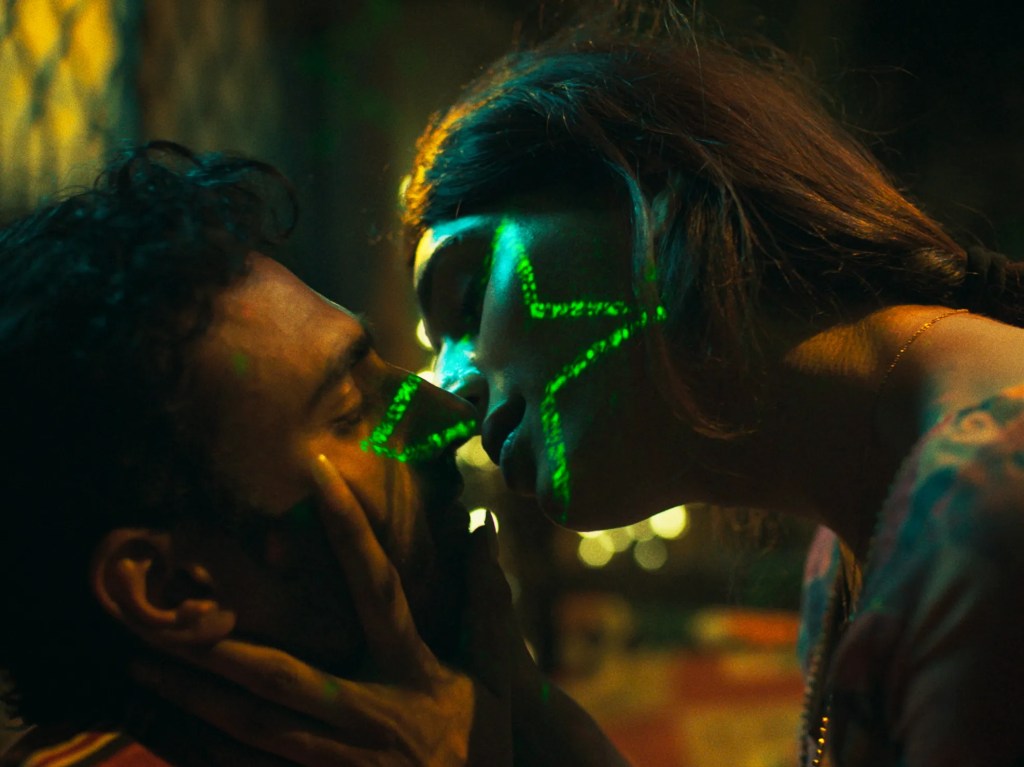
Rita Banerjee will introduce and lead the discussion for Saim Sadiq’s 2022 film, Joyland, on Tuesday, May 14, 2024 from 6-8:30 pm for the Institute for Indology and Tibetology at Ludwig-Maximilians-Universität München. The screening will take place in Seminar Room 427 (Ludwigstr. 31, Munich), and anyone interested in South Asian aesthetics, literary theory, or art-house film is welcome to join the screening.
“This year’s Queer Palme winner, and the first ever Pakistani film in the Cannes official selection, Saim Sadiq’s debut impresses with its sensitive storytelling and vibrant visuals… Tartly funny and plungingly sad in equal measure, this is nuanced, humane queer filmmaking, more concerned with the textures and particulars of its own intimate story than with grander social statements — even if, as a tale of transgender desire in a Muslim country, its very premise makes it a boundary-breaker.” – Guy Lodge, Variety
Rita Banerjee is an Assistant Professor of Creative Writing and Director, MFA Program for Writers at Warren Wilson College.
Rita Banerjee will introduce and lead the discussion for Sujoy Ghosh’s 2012 film, Kahānī (Story, कहानी), on Tuesday, May 7, 2024 from 6-8:30 pm for the Institute for Indology and Tibetology at Ludwig-Maximilians-Universität München. The screening will take place in Seminar Room 427 (Ludwigstr. 31, Munich), and anyone interested in South Asian aesthetics, literary theory, or art-house film is welcome to join the screening.
“The sudden disappearance of an IT contractor in Kolkata triggers a riveting, labyrinthine puzzle, replete with duplicitous spy shenanigans, in Kahaani. Versatile [thespian] powerhouse Vidya Balan follows up her daring vamp in The Dirty Picture with a dazzling portrait of a determined London-based woman traveling to the subcontinent in search of her missing husband. Buttressed by compelling [performances], this adroit thriller makes the occasional misstep but maintains momentum and credibility. Forgoing Bollywood’s standard musical numbers, the pic could potentially cross over to wider [audiences] with an appetite for thrillers.” – Russell Edwards, Variety
Rita Banerjee is an Assistant Professor of Creative Writing and Director, MFA Program for Writers at Warren Wilson College.
On Wednesday, February 21, 2024, Dr. Rita Banerjee will be a Visiting Lecturer in Adam Sexton’s Class “The Craft of Fiction” at Yale University. She will present on “Narrative Forms from World Literature: Rasa Theory & Kishōtenketsu” and the lecture details follow below:
“Narrative Forms from World Literature: Rasa Theory & Kishōtenketsu” A Guest Lecture by Dr. Rita Banerjee February 21, 2024 | 2:30-3:30 pm EST Yale University, New Haven, CT 06520
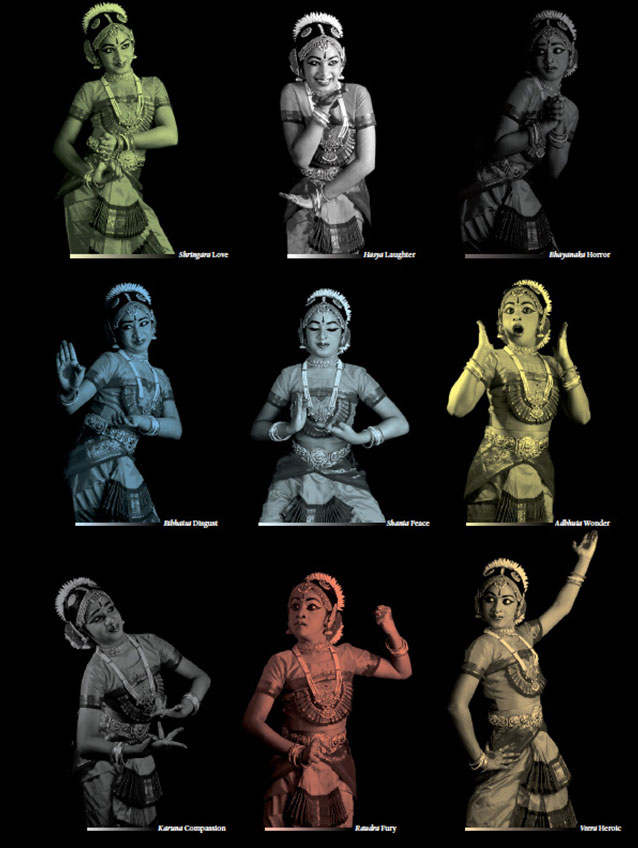
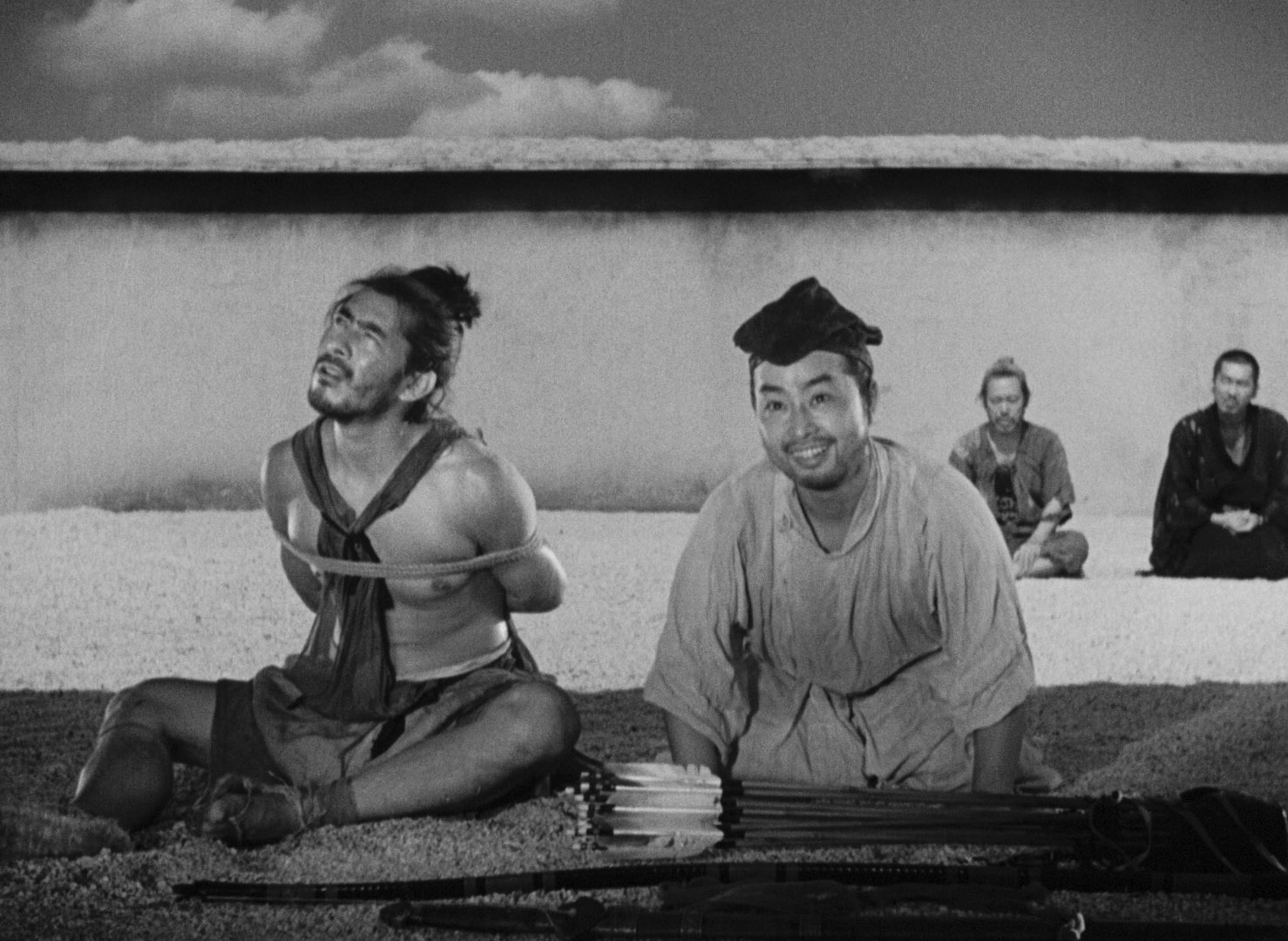
In contemporary American creative writing, theatre, and screenwriting classes, the narrative structures and forms most centered are derived from the Western literary canon. Aristotle’s definition of comedy, tragedy, and catharsis from the Poetics and Gustav Freytag’s “plot triangle” from Die Technik des Dramas are seen as the conventional and standard way by which we analyze and structure storytelling. However, in our class on Narrative Forms from World Literature, we will study and learn from narrative structures, forms, aesthetic theories, and storytelling techniques from a variety of world literatures. We will delve into storytelling forms beyond the plot triangle and will highlight Nonwestern narrative techniques like rasa theory, which centers nine major emotional states to make the connection between viewer and character stronger. Rasa theory derives from Bharata’s Nāṭyaśāstra, which acts as a counterpoint to Aristotle’s demarcation of tragedy and comedy from the Poetics. This class will also explore the kishōtenketsu narrative form from Japanese. By studying Narrative Forms from World Literature, students will diversify and strengthen their craft knowledge and technique, and will gain access to storytelling structures, forms, and aesthetic traditions beyond the Anglo-American canon.
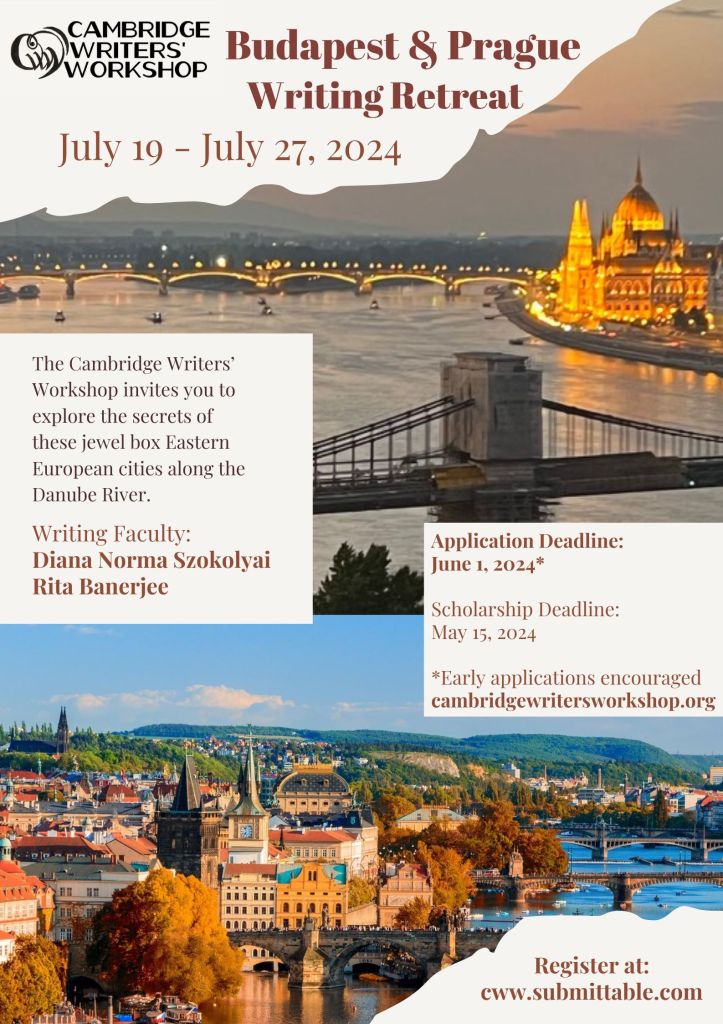
The Cambridge Writers’ Workshop Budapest and Prague Writing Retreat will be held from July 19 – 27, 2024 in the historic city center of Budapest, Hungary and Prague, Czech Republic. The retreat features writing and publishing workshops, craft seminars, and generative writing sessions for poets, fiction writers, and creative nonfiction writers. The faculty includes poets and prose writers Rita Banerjee and Diana Norma Szokolyai. The cost of the retreat is $4,800, which includes tuition, lodging, daily breakfast, and special meals. Using only the online application system, submit 5 to 10 pages of poetry, fiction, creative nonfiction, or hybrid work, and a brief cover letter (including a bio and contact information for two references) with a $10 application fee by June 1. Early applications strongly encouraged as seats are limited on the retreat. Multilingual poetry and prose submissions, including self-translations, are welcome. Partial scholarships for BIPOC writers, LGBTQ+ writers, writers who are students, and writers who are parents are available. To apply for a scholarship, submit a general retreat application, as well as a cover letter, including a statement on how the scholarship will assist you in meeting your writing goals, by May 15. There is no application fee for scholarships. Registration is first come, first served; space is limited. Visit the cww.submittable.com for an application form and more information.
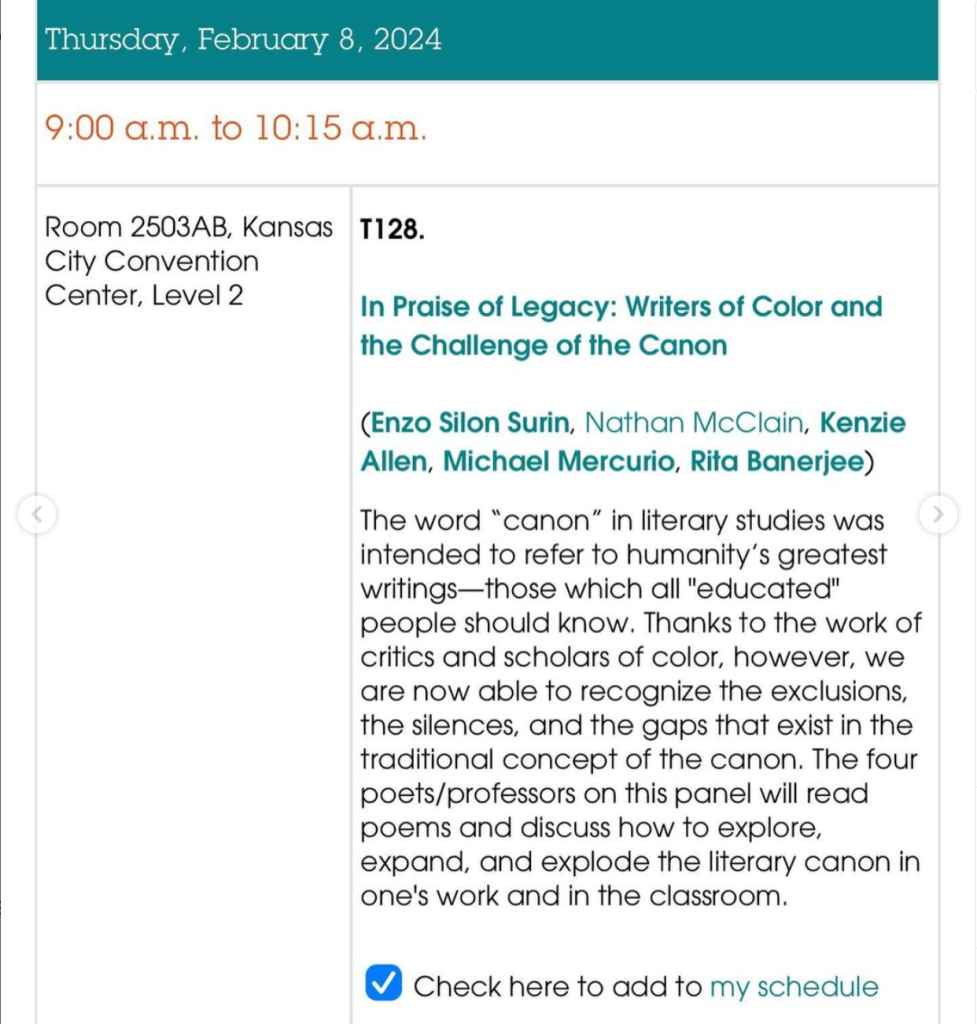
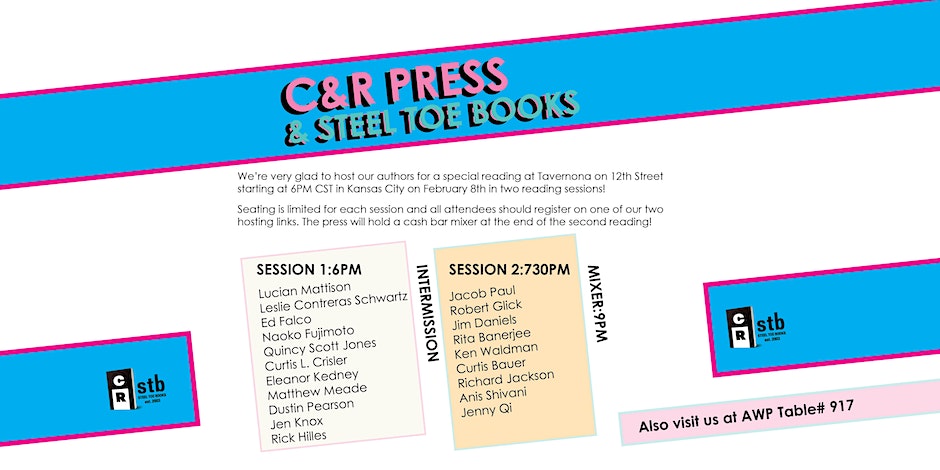
If you are planning to attend the AWP 2024 Conference in Kansas City, MO from February 7-10, 2024, stop by these events featuring Rita Banerjee and the MFA Program for Writers at Warren Wilson College!To learn more about the MFA Program for Writers at Warren Wilson College, stop by the Warren Wilson MFA Booth (#3225) at the AWP 2024 Bookfair from February 7-10, 2024!!
Thursday, February 8, 2024:
In Praise of Legacy: Writers of Color and the Challenge of the Canon feat. Michael Mercurio, Rita Banerjee, Kenzie Allen, Enzo Silon Surin, & Nathan McClain February 8, 2024 * 9:00 am – 10:15 am CST Room 2503AB, Kansas City Convention Center, Level 2 AWP 2024 Conference, Kansas City, MO
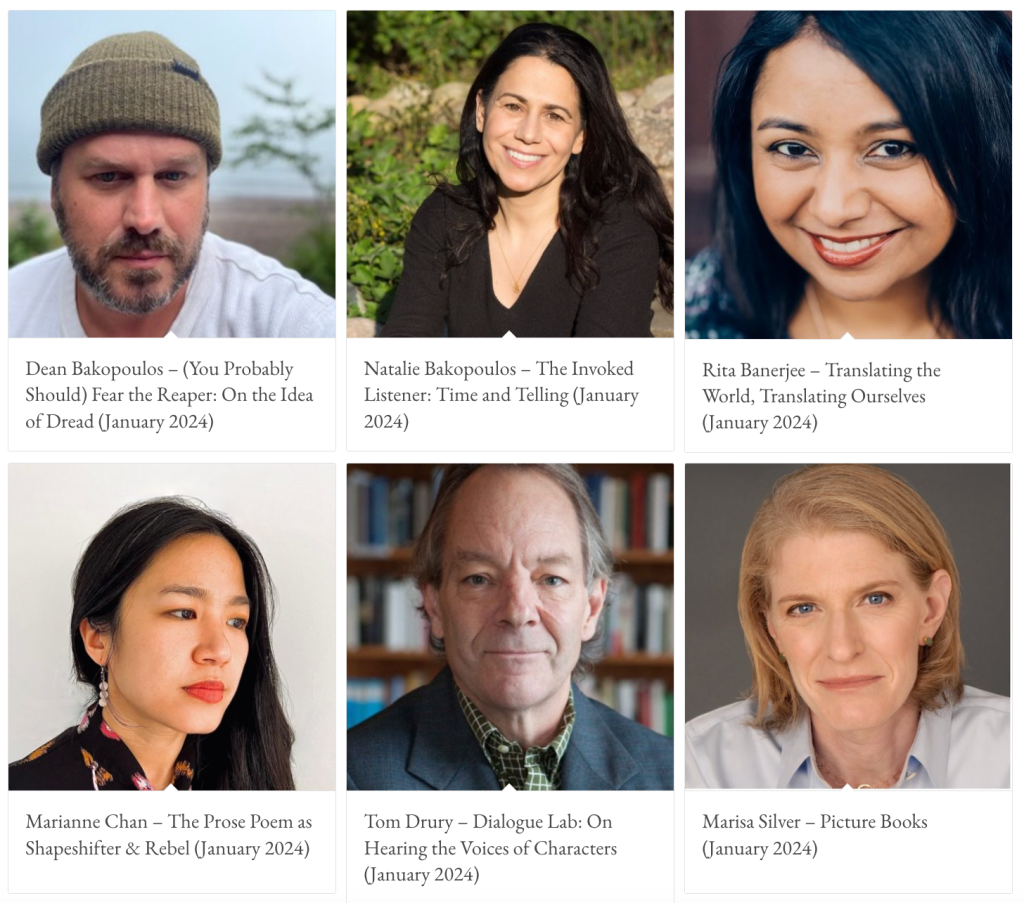
TheMFA Program for Writers recently celebrated its annual winter residency at the Blue Ridge Assembly, the site of the original Black Mountain College in Black Mountain, North Carolina. The residency featured inspiring lectures and classes from both faculty and graduating students. And writers and readers can access the wonderful craft discussions and lectures from the MFA Program for Writers faculty online here. Rita Banerjee’s Opening Lecture, “Translating the World, Translating Ourselves,” explores why translation is such a vital aesthetic, psychic, and embodied craft tool for creative writers. In translating our experiences and ourselves onto the page, we as writers become more aware of the metaphors we live by and can ask ourselves “What is the story behind my story, essay, or poem?” Some authors studied in the talk include Basho, Agyeya, Allen Ginsberg, Elizabeth Bishop, Rudyard Kipling, James Baldwin, Yoko Tawada, and Jhumpa Lahiri.
The Warren Wilson MFA Program for Writers store features a rich archive of faculty lectures and craft discussions from January 1992 – January 2024, and can be accessed here: https://www.wwcmfa.org/store/




 Rita Banerjee