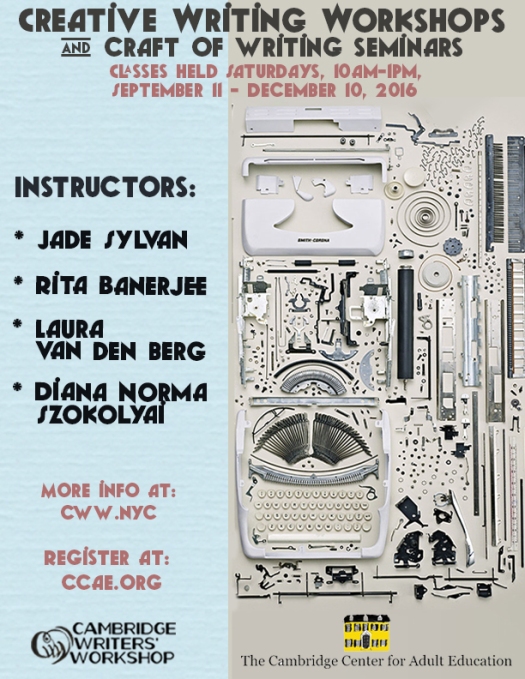
The Cambridge Writers’ Workshop is proud to announce our new series of creative writing workshops and craft of writing seminars in partnership with the Cambridge Center for Adult Education in Cambridge, MA! The Cambridge Writers’ Workshop is thrilled to return to Cambridge and to offer an exciting range of courses for our Boston-area writers. Our featured faculty this fall includes Jade Sylvan, Rita Banerjee, Laura van den Berg, and Diana Norma Szokolyai. Information on classes, meeting times, and faculty are listed below. Courses are $40 each and those who register for 5 or more classes will receive a 10% discount on registration. Two kinds of classes will be offered this fall at the Cambridge Center for Adult Education (56 Brattle St, Cambridge, MA 02138 USA): craft of writing seminars and writing workshops. In craft of writing seminars, students will learn about a particular craft issue, study and discuss examples of contemporary creative writing, and will do an in-session writing prompt. For creative writing workshops, students will bring in new and in-progress creative work to be reviewed and critiqued during class.
Registration for our Fall 2016 creative writing workshops and craft of writing seminars will open on the Cambridge Center for Adult Education website on July 27, 2016! Since 1938, The Cambridge Center for Adult Education has offered a most diverse menu of courses to adults in Cambridge and surrounding areas, and it aims to give people the opportunity to explore their interests and nurture their talents and potential. We’re proud to collaborate with the CCAE!
Location:
Cambridge Center For Adult Education
56 Brattle St, Cambridge, MA 02138 USA
Time:
Saturdays, 10 am – 1 pm, September 10 – December 10, 2016
Schedule:
September 10:
“What’s At Stake in your Poetry, Fiction, & Nonfiction Manuscripts?”
with Diana Norma Szokolyai (writing workshop)
September 24:
“Science : Fiction – Building Literary Worlds”
with Rita Banerjee (craft of writing seminar)
October 8:
“Revision Strategies for All Genres”
with Jade Sylvan (writing workshop)
November 5:
“Time in the Short Story”
with Laura van den Berg (craft of writing seminar)
November 12:
“Spatial Poetics”
with Diana Norma Szokolyai (craft of writing seminar)
December 3:
“Emotion and Suspense in Theatre, Poetry, and (Non)Fiction”
with Rita Banerjee (craft of writing seminar)
December 10:
“Writing Yourself Naked”
with Jade Sylvan (writing workshop)
Featured Faculty:
 Jade Sylvan (they/them/their), called a “risqué queer icon” by The Boston Globe, is an award-winning author, poet, screenwriter, producer, and performing artist heavily rooted in the literary and performance community of Cambridge and Somerville, Massachusetts. Jade’s most recent book, Kissing Oscar Wilde (Write Bloody, 2013), a novelized memoir about the author’s experience as a touring poet in Paris (sponsored by a travel grant from The Foundation of Contemporary Arts), was a finalist for the New England Book Award and the Bisexual Book Award. Other work has appeared in The Washington Post, Buzzfeed, The Toast, Mudfish, Lady Churchill’s Rosebud Wristlet, and many other publications. Jade has toured extensively, performing their work to audiences across the United States, Canada, and Europe. They are currently overseeing the production of their first full-length stage play, Spider Cult the Musical, opening June 24th, 2016 at Oberon Theater in Harvard Square.
 Rita Banerjee is the Creative Director of the Cambridge Writers’ Workshop and the new Executive Director of Kundiman. She received her doctorate in Comparative Literature from Harvard and her MFA in Creative Writing from the University of Washington, and her writing appears in The Rumpus, Los Angeles Review of Books, Electric Literature, VIDA: Women in Literary Arts, AWP WC&C Quarterly, Queen Mob’s Tea House, Riot Grrrl Magazine, The Fiction Project, Objet d’Art, KBOO Radio’s APA Compass, and elsewhere. Her first collection of poems, Cracklers at Night (Finishing Line Press), received First Honorable Mention for Best Poetry Book of 2011-2012 at the Los Angeles Book Festival, and her novella, A Night with Kali (Spider Road Press), is forthcoming in October 2016. Finalist for the 2015 Red Hen Press Benjamin Saltman Award and the 2016 Aquarius Press Willow Books Literature Award, she is currently working on a novel and book of lyric essays.
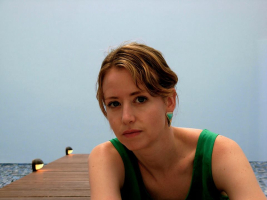 Laura van den Berg is the author of the novel Find Me, longlisted for the 2016 International Dylan Thomas Prize an selected as a best book of 2015 by Time Out New York and NPR, and two story collections What the World Will Look Like When All the Water Leaves Us and The Isle of Youth, both finalists for the Frank O’Connor International Short Story Award. Her honors include the Bard Fiction Prize, the Rosenthal Family Foundation Award from the American Academy of Arts and Letters, the Jeannette Haien Ballard Writer’s Prize, a Pushcart Prize, and an O. Henry Award, and her fiction has been anthologized in The Best American Short Stories. She has taught fiction at institutions including Johns Hopkins University, Columbia University, the Warren Wilson M.F.A. Program for Writers, and the Bread Loaf Writers’ Conference. At present, Laura is a Briggs-Copeland Lecturer in Fiction at Harvard University and lives in Cambridge, MA, with her husband and dog.
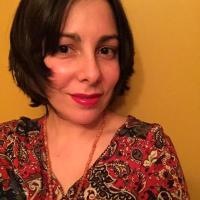 Diana Norma Szokolyai is a writer/interdisciplinary artist/educator and Executive Artistic Director of Cambridge Writers’ Workshop. Based in Brooklyn, NY, she is author of the poetry collections Parallel Sparrows(honorable mention for Best Poetry Book in the 2014 Paris Book Festival) and Roses in the Snow (first runner-up Best Poetry Book at the 2009 DIY Book Festival). She also records her poetry with musicians and has collaborated with several composers. Her poetry-music collaboration with Flux Without Pause led to their collaboration “Space Mothlight” hitting #16 on the Creative Commons Hot 100 list in 2015, and can be found in the curated WFMU Free Music Archive. Szokolyai’s work has been published in Quail Bell Magazine, Lyre Lyre, The Fiction Project, The Boston Globe, Dr. Hurley’s Snake Oil Cure, and Up the Staircase Quarterly, as well as anthologized in The Highwaymen NYC #2, Other Countries: Contemporary Poets Rewiring History, Always Wondering and Teachers as Writers. Szokolyai earned her Ed.M. in Arts in Education from Harvard University and her M.A. in French Literature from the University of Connecticut, while she completed coursework at the Sorbonne and original research in Paris for two years. She is currently at work on three books and recording an album of poetry & music.




 Rita Banerjee