The Reader as Critic: Everything You Ever Wanted to Know about South Asian Literary Theory But Were Afraid to Ask – Rutgers University – April 20

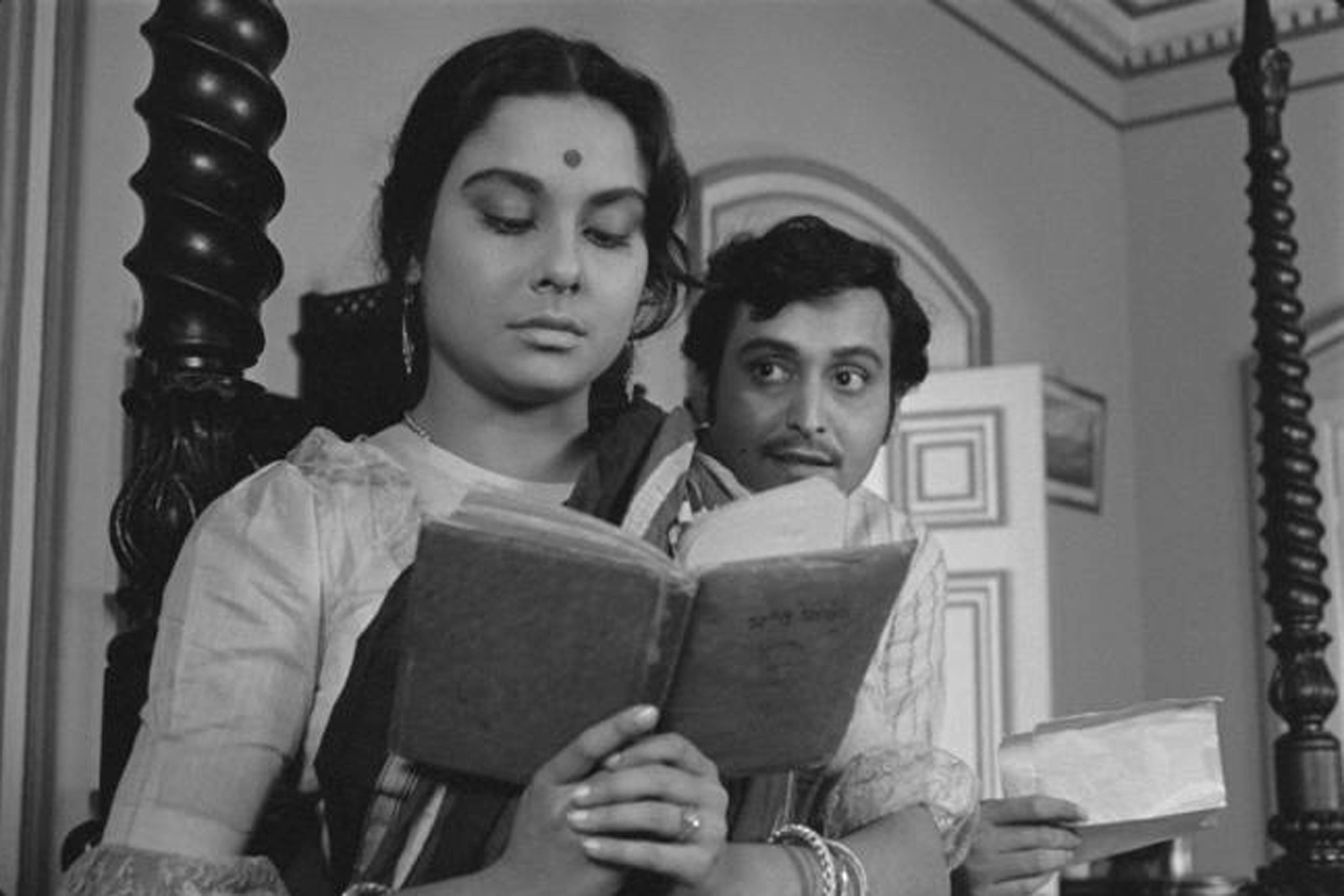
Charulata (dir. Satyajit Ray, 1964)

A Lecture by Dr. Rita Banerjee
Department of African, Middle Eastern, South and South Asian Literatures and Languages

Thursday, April 20 * 11:30 am – 1:00 pm
Rutgers University, Academic Building 6010
15 Seminary Place, New Brunswick, NJ 08901

The creation hymn from the Rig Veda begins with a series of provocative statements and spiky questions: “There was neither non-existence or existence then…The gods came afterwards, with the creation of this universe…Whence this creation has arisen…the one who looked down on it, in the highest heaven, only he knows – or perhaps, he does not know.” In explaining the origins of the Indus Valley civilization and the universe at large, the Rig Veda’s playful, interrogative style places the burden of understanding and interpretation on the reader. The creative power of the poet, non-dualism, uncertainty, and even atheism are hinted at in these opening lines of the Rig Veda. But what makes this seminal and foundational text of Indic philosophy and oral literature especially interesting is the emphasis it places on the critical distance and interpretive lens of the reader. From the Rig Veda onwards, this gesture towards hermeneutics repeats in canons of South Asian literary theory and literature from texts such as Bharata’s yaśāstra and Kālidāsa’s The Recognition of Śakuntalā in the classical period, to the manifestos and discussions of literary modernisms emerging in Bengali, Hindi, and Indian English little magazines and literatures in the 20th century. In this talk, we will examine why Indic literature continues to place the reader in the role of a critic, translator, debater, or connoisseur. What does placing the reader in the role of the critic convey about South Asian literary theory and intellectual culture? Does the emphasis on the reader as critic reveal the deconstructive, pluralistic, or matrix-like nature of South Asian literary theory? Come join us for a rousing debate and discussion on the structural gestures and intellectual goals of South Asian literary theory.

Asian American Arts Alliance – Art for Change Meeting – December 8, 7-9 pm * Brooklyn, NY

a4_logotagline_hi-res
Art for Change Discussion & Panel
December 8th, 7 – 9:30 pm
Asian American Arts Alliance, 20 Jay Street, Suite 740, Dumbo, Brooklyn 11201

In the wake of the last election, how can we, as artists and arts professionals, empower ourselves?  API leaders from New York City arts organizations will discuss the changing political and social climate and what they think art has the power to do and can do in the coming months. This convening will create a space for the community to gather and collectively brainstorm how to harness artists’ power to change and mediate the discourse in society.  The hour-long panel discussion will be followed by a facilitated breakout session with attendees and a share out. 

Moderator:
Christine Toy Johnson

Panelists:
Rita Banerjee, Executive Director, Kundiman
Devin Oshiro, Artistic Associate, Gibney Dance
Kyoung Park, Artistic Director, Kyoung’s Pacific Beat
Jesca Prudencio, Associated Artist, Ping Chong + Company

“Encountering Allen Ginsberg: The South Asian Avant-Garde Response to the Beats” – ACLA, Harvard University – March 18

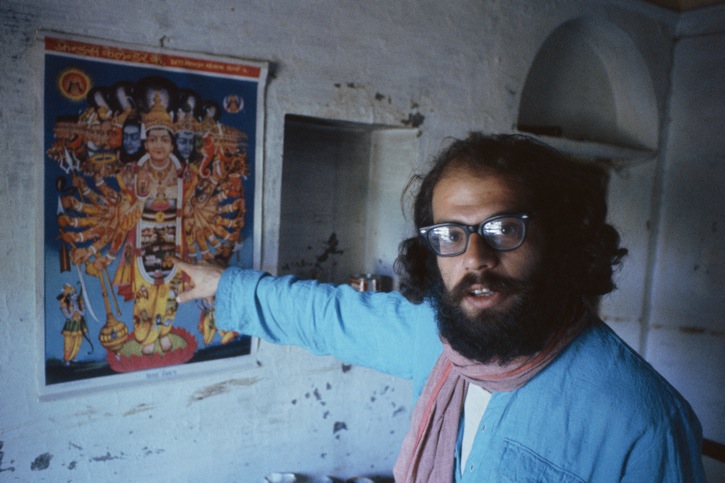
BENARES, INDIA - FEBRUARY 1963: Beat poet Allen Ginsberg points at art poster during February 1963 in his tenement apartment near the banks of the Ganges river in Benaras, India. Ginsberg explored Eastern philosophies with Peter Orlovsky and other founders of the Beat movement during his March '62 - May '63 stay. (Photo by Pete turner/Getty Images)

Presented by Dr. Rita Banerjee
Cross-Cultural Values: Confluences and Conflicts
Friday March 18, 2016 * 2:00 – 3:45 pm
Emerson Hall, Room 307, Harvard University

In the early 1960s, Allen Ginsberg, Peter Orlovsky, Gregory Corso, and Gary Snyder travelled extensively across India and met with several avant-garde South Asian writer groups such as the Krittibās and Hungry Generation writers in Bengali, the Nayī Kavitā poets in Hindi, and with P. Lal’s English-language Writers Workshop group. This paper will examine the ways in which the South Asian avant-garde interpreted, welcomed, and/or challenged the Asia-oriented gaze of Allen Ginsberg and his fellow Beats. The complicated South Asian response to the Beat Generation will be investigated through examples of literary criticism, translation, and first-hand accounts of the Beats as produced by modernist, Hungry Generation, and post-Independence confessionalist writers in Hindi, Bengali, and Indian English.

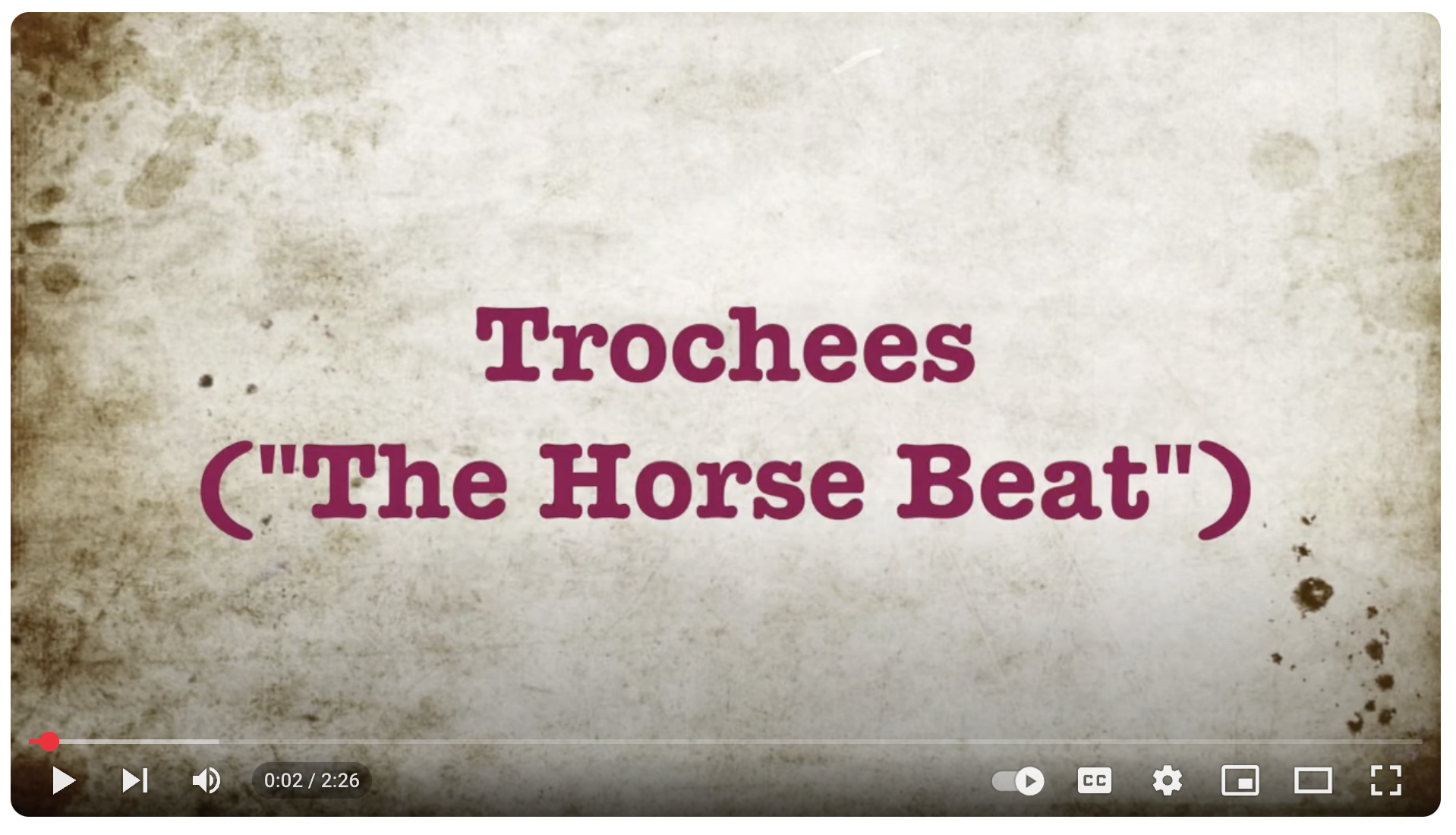
“Trochees: The Horse Beat” Lecture Narrated by Rita Banerjee

In honor of a guest lecture at Mount Saint Mary’s University in Los Angeles in January 2016, poet Rita Banerjee created the presentation “Trochees: The Horse Beat,” which can be viewed on YouTube. This mini-lecture, which was presented as part of Rita Banerjee’s class “Poetry & What’s at Stake,” features a study of the trochaic form in English poetry with a close reading of William Blake’s “The Tyger.” The lecture is available to the public and for classroom use on YouTube here.

The Recognition of Śakuntalā: Sex, Comedy, and Rasa – October 1

A Lecture by: Dr. Rita Banerjee
Rutgers University *
Thursday October 1, 2015 * 3:20-4:40 pm
Rutgers Cinema Room 2 * Livingston Campus

This lecture will focus on how Rasa Theory, as outlined by the dramatist Bharata in his Nāṭyaśāstra and the 10th century aesthetician Abhivanagupta, can be read in Kālidāsa’s play, The Recognition of Śakuntalā.  This talk will focus on how Kālidāsa employs various bhāvas (emotions), alaṃkāras (literary devices), and forms of abhinaya (acting) through suggestion (dhvani) to manipulate the emotional state of his audience.  Sex, comedy, and the emotional upheaval of Kālidāsa’s play will be compared to later adaptations of Śakuntalā and to the structure and eros of Goethe’s Faust.

South Asia and Theories of the Avant-Garde: The International Scope of South Asian Literary Modernisms – September 24

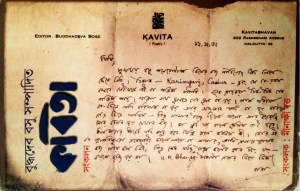
KavitaA Lecture by: Dr. Rita Banerjee
Institut für Indologie und Tibetologie
Ludwig-Maximilians-Universität München

Rutgers University
Thursday September 24, 2015
Reception 4:30 p.m. – Lecture 5:00 p.m.
Alexander Library, Pane Room

169 College Avenue, New Brunswick, NJ 08901

RBThis presentation will highlight the role that translation and multilingualism played in opening up discussions and theories of modernism within the South Asian literary canons of Bengali, Hindi, and English in the early to mid-20th century. The lecture will explore the representations and international scope of literary modernisms in journals such as Kallol, Kavitā, and Krittibās in Bengali, the Nayī Kavitā journal and the Tār Saptak group in Hindi, and the Writers Workshop group in English. Theories of modernism as proposed by critics such as Dipti Tripathi and Acharya Nand Dulare Bajpai will be contrasted with manifestos of modernism, with Agyeya’s defense of experimentalism (prayogvād), with theories of translation as proposed by Bhola Nath Tiwari, and with translations of foreign writers and aesthetic forms. In doing so, the presentation will note how the study of modernist practices, translation, and theory in Bengali, Hindi, and English provides insight into the pluralistic, multi-dimensional, and ever-evolving cultural sphere of modern South Asia beyond the suppositions of postcolonial binaries and monolingual paradigms.

Sponsored by: Program in Comparative Literature • South Asian Studies Program •
Department of African, Middle Eastern, and South Asian Languages and Literatures •
Office of the Dean of Humanities and Office of Undergraduate Academic Affairs, School of Arts and Sciences

Guest Lecture: The Rāmāyaṇa as Speculative Fiction by Anil Menon – June 17

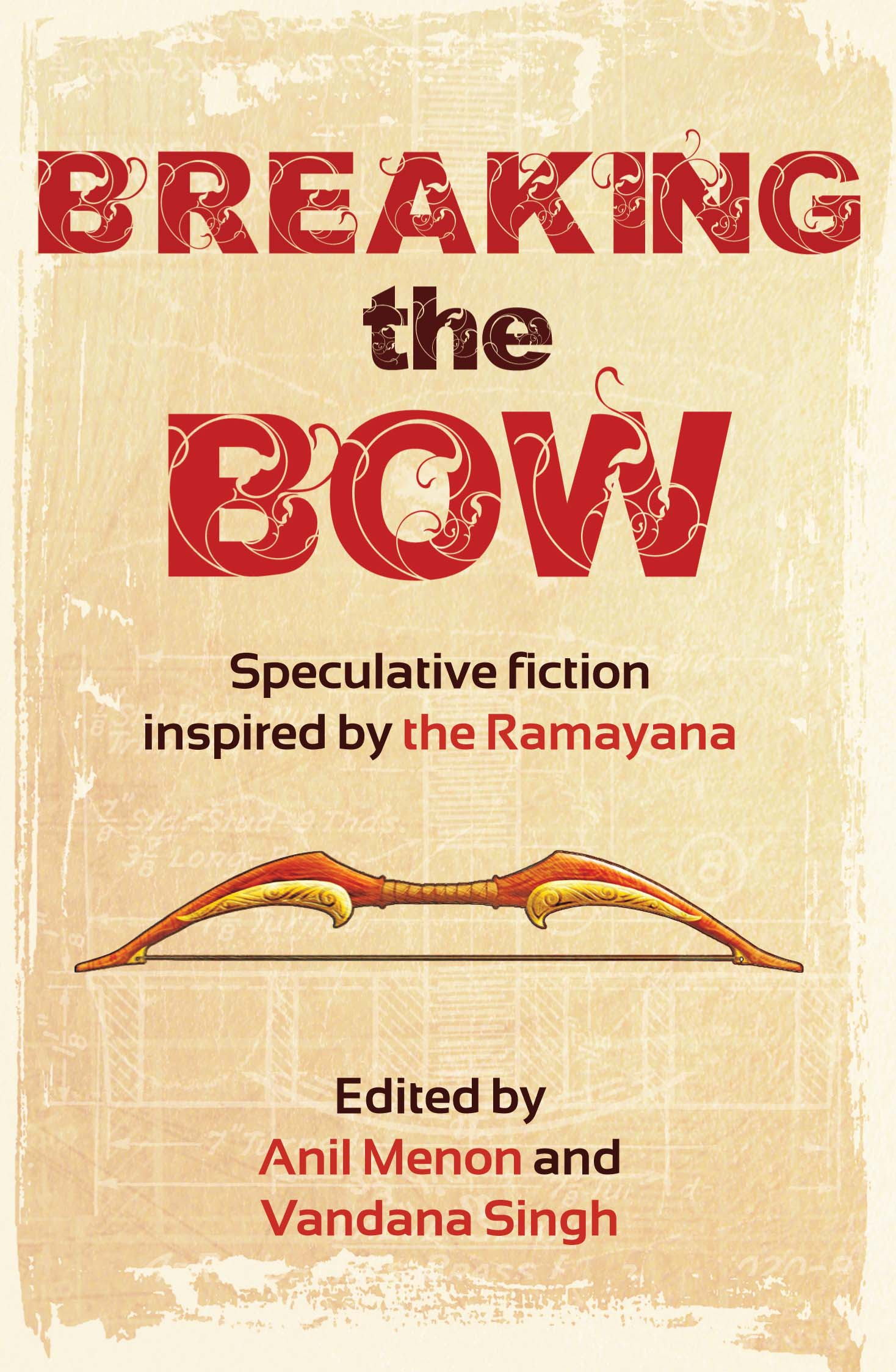
BreakingtheBowSouth Asian Science-Fiction writer Anil Menon will give a special guest lecture on “Rendevous with Rama: The Rāmāyaṇa as Speculative Fiction” in Rita Banerjee’s course Modernity and the South Asian Imaginaire.  The lecture will take place on Wednesday June 17 from 12-2 pm at the Institute for Indology and Tibetology at Ludwig-Maximilians-Universität München in Seminar Room 427 (Ludwigstr. 31, Munich).  The lecture is part of the course Modernity and the South Asian Imaginaire at LMU.  Anyone interested in Modern South Asian literature, history, or art house film is welcomed to join Menon’s special guest lecture.

Rendezvous With Rama: The Rāmāyaṇa as Speculative Fiction

In speculative fiction, a story’s context is also a part of the story, and when writing speculative fiction, an author can play with many other contexts as well: political, psychological, social, anthropological, historical, ethical, and so on.  Speculative fiction is thus a literature of ambiguity, interpretation, and surprise.  In this talk, we’ll examine the Rāmāyaṇa (mainly, Valmiki’s version) and see if it can be characterized as speculative fiction. As Naiyar Masud’s story “Sheesha Ghat” illustrates, it can be tricky to make these decisions. At the other end of the spectrum, we have “The Jaguar’s Wife,” a narrative with rather improbable events, but which insists on being read as a realist tale. Between the stuttered speech of Masud’s child protagonist and the multitude of voices in “The Jaguar’s Wife,” may be positioned the silent lonely figure of Lord Rama, the man devoted to moral action. I’ll argue that it is in playing with the contextual assumption that Text (words, laws, rules,…) can represent the actual world, that the Rāmāyaṇa becomes a work of speculative fiction.
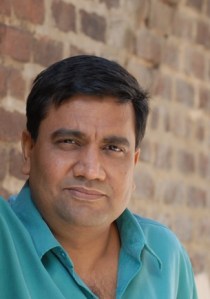
AnilM15Anil Menon’s short fiction has appeared in a variety of magazines and anthologies including Albedo One, Interzone, Interfictions, Jaggery Lit Review, LCRW, Sybil’s Garage, and Strange Horizons. His stories have been translated into Chinese, French, German, Hebrew and Romanian. His debut novel The Beast With Nine Billion Feet (Zubaan Books, 2010) was short-listed for the 2010 Vodafone-Crossword award and the Carl Brandon Society’s 2011 Parallax Award. Along with Vandana Singh, he co-edited Breaking the Bow (Zubaan Books 2012), an anthology of speculative fiction stories inspired by the Ramayana. He has a forthcoming novel Half Of What I Say (Bloomsbury, 2015). He can be contacted at iam@anilmenon.com.