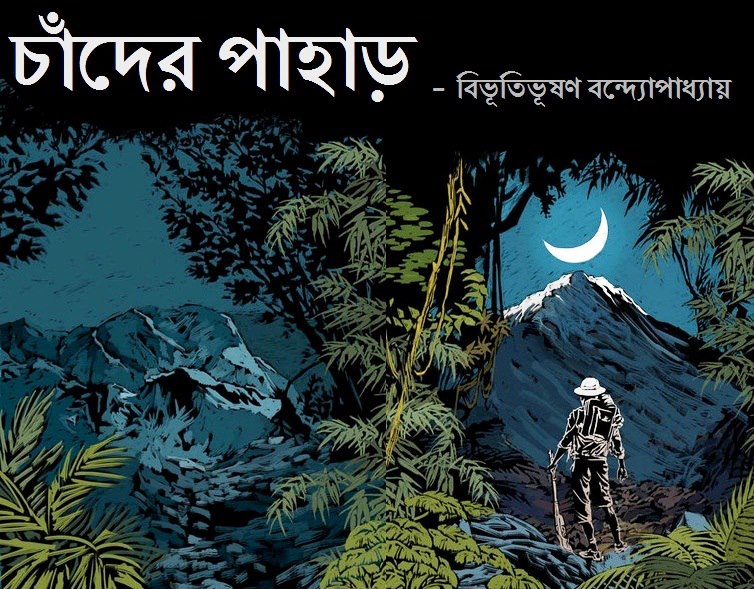
Screening of Kamaleswar Mukherjee’s Chander Pahar (2013) – July 5

ChanderPaharRita Banerjee will introduce and lead the discussion for Kamaleswar Mukherjee’s 2013 film, Chander Pahar (Moon Mountain), on Tuesday July 5 from 6-8:30 pm for the Institute for Indology and Tibetology at Ludwig-Maximilians-Universität München, (Ludwigstr. 31, Seminarraum 427).  The screening is part of the course Genre and Modern South Asian Literatures at LMU.  Anyone interested in genre, Modern South Asian literature, or art house film is welcomed to join the screening.

Chander Pahar (Moon Mountain), a beloved Bengali adventure novel written by Bibhutibhushan Bandopadhyay in 1937, is not an easy book to bring to the big screen. Key plot points include an erupting volcano and a prehistoric-looking beast, not to mention deadly spiders, snakes and lions. The story follows Shankar (Dev), a young Indian man beset with wanderlust. He can hardly believe his good fortune when he lands a job as a station manager along a Ugandan railroad, which means he’ll be living alone in the wilderness of Africa visited by people only when the train makes its brief daily stop. The latter half of the movie involves Shankar’s friendship with another adventurer, Diego Alvarez (Gerard Rudolf), and their journey to find riches in the Richtersveld, a mountainous desert region in South Africa.   Director Kamaleswar Mukherjee shot the film primarily in South Africa, and the vistas and animals are breathtaking. – Stephanie Merry, The Washington Post

Emotion & Suspense in Theatre, Poetry, and (Non)Fiction – Munich Readery Creative Writing Workshop – June 25 [SOLD OUT]

EmotionandSuspenseEmotion & Suspense in Theatre, Poetry, & (Non)Fiction
Saturday June 25, 2016 * 9:00-12:00

The Munich Readery
Augustenstraße 104, 80798 München

Plato argues that human behavior flows from three main sources: desire, emotion, and knowledge.  And before staging Kalidasa’s The Recognition of Śākuntalā, the director challenges his actress-lover: “As though in a painting, the entire audience has had their emotion colored through your melody.  So now—what shall we perform to sustain the mood?”  In this class, we will explore how creating vivid emotional worlds between characters and within storylines can build suspense, sustain drama, and lure the reader deeper in. If you’re currently working on a short story, novel, screenplay, theatrical play, lyrical essay, memoir, or narrative poem which has a unique emotional landscape, come stop by the Munich Readery on Saturday June 25 for our next creative writing workshop led by Rita Banerjee.  To register, send an email to John by June 20 at:store@themunichreadery.com. Workshop Fee: €30.  This workshop is SOLD OUT.

Screening of Srijit Mukherji’s Hemlock Society (2012) – June 17

Hemlock2

Rita Banerjee will introduce and lead the discussion for Srijit Mukherji’s 2012 film, Hemlock Society, on Friday June 17 from 6-8:30 pm for the Institute for Indology and Tibetology at Ludwig-Maximilians-Universität München, (Ludwigstr. 31, Seminarraum 427).  The screening is part of the course Genre and Modern South Asian Literatures at LMU.  Anyone interested in genre, Modern South Asian literature, or art house film is welcomed to join the screening.

Hemlock Society depicts the wear and tear of the city life and how mechanical we are becoming. Meghna (Koel Mallick) is down and out after she finds her boyfriend cheating. Her relationship of many years crumbles within a few minutes. The matter is made further worse with her loosing her job and he bitter relationship with her father who has married someone else after her mother’s death. Desperate and disgruntled Meghna contemplates suicide. As she is about to gulp some sleeping pills, she is intruded upon by a strange man who calls himself Ananda Kar (Parambrata Chatterjee). Ananda tells her that she has every right to commit suicide but warns her that a failed suicide is much worse than death in itself. She offers to train her on how to commit suicide professionally at his school, which he calls “The Hemlock Society.”  Shaken and confused, Meghna agrees and sets off on a journey with this strange man not knowing that the journey she embarks upon will lead her to self discovery, happiness, and above all, love. ~ Aambar.

“There is no end to the story” – Moushumi Sen Sarma reviews Rita Banerjee’s Munich Creative Writing Workshops

MunichWorkshopsMunich-based writer and novelist, Moushumi Sen Sarma, reviews Rita Banerjee’s creative writing workshops in her essay, “There is no end to the story.”  Sen Sarma writes:

If you have wondered what I have been up to all these days, and for that matter, what I am up to in general, here is the blog post that will tell you. I have been and am writing, my friends. Until recently, I have been working on two novels, and some short stories. A few weeks ago, I attended a workshop on the art of world-building in science fiction and suddenly wrote up the first pages of a third novel. So now I am working on three novels. Plus those short stories. Also I am totally excited about a poetry workshop coming up next Saturday. Because I do ocassionally write these short lines on a sheet of paper that tend to sound lyrical, at least to me. So soon, I shall find out if they qualify as poetry or not…

But I am really lucky to have found a thriving community of English-language writers in Munich, supported by a wonderful independent bookstore and its proprietors Lisa Yarger and John Browner, and an inspiring teacher in Rita Banerjee. Ever since I found out about her workshops, that’s two years ago, I have diligently attended all the ones I could. Back when I was still doing science, I found conferences to be very inspiring. I would come back from one of those, all fired up and raring to work on some new idea that I had.

These literary workshops do the same for me. I look at my work with new eyes and come back encouraged and inspired. And I write, revise, write, revise and I enjoy every moment of the process. That is how I know that I have found my calling. Do you enjoy what you do? Do you like it so much that you don’t mind the ups and downs that come with it? If the answers are yes to both, you will know that you have found your calling too.

Read the full review here.

Poetry & What’s at Stake – Munich Readery Creative Writing Workshop – June 4

OBIT BARAKA 4Poetry & What’s at Stake
Saturday June 4, 2016 * 9:00-12:00

The Munich Readery,
Augustenstraße 104, 80798 München

“What’s at stake” reveals how and why a poem is being told. What’s at Stake builds urgency, conflict, and pivotal turns within a lyrical or narrative poem, and drives engagement. It reveals what’s on the line for the speaker and the reader in terms of personal, emotional, psychological, physical, social, and political investments. In this class will read work by poets such as Gertrude Stein, Paul Celan, Allen Ginsberg, Amiri Baraka, Sunil Gangopadhyay, Carolyn Forché, Yusef Komunyakaa, Patrick Rosal, Bianca Stone, and Ocean Vuong, and will explore how writers and readers become more invested in a poem, its performance, and its narrative by raising the stakes. If you’re currently working on narrative or lyrical poetry, or are interested in the commitments and stakes of modern world poetry, come stop by the Munich Readery on Saturday June 4 for our next creative writing workshop led by Rita Banerjee.  To register, send an email to John by June 1 at: store@themunichreadery.com. Workshop Fee: €30.

“Narrative as Provocation” by Rita Banerjee featured on The Poetry Foundation

poetry_foundationThe Poetry Foundation has featured Rita Banerjee’s article, “Narrative as Provocation” on their Harriet: A Poetry Blog today.  The Poetry Foundation writes:

Poet Douglas Piccinnini’s Story Book: A Novella (The Cultural Society, 2015) “suspends and electrifies narration mid-creation,” writes Rita Banerjee in a review of the work at LA Review of Books. “Piccinnini’s training as a poet illuminates his work, the structure of his prose echoing the long-lines of Ammons and Walt Whitman,” she writes.  More:

“These rolling lines are less biting than Ginsberg’s, but through a Stein–like interplay of sense and nonsense, his diction evokes vulnerability and makes evident the emotional, psychological, and cultural stakes involved. In this space of confusion, syntax and grammar break down as the speaker attempts to reformulate his own expression and empower his own disabled tongue. As language learns to articulate itself, ready-made forms of cultural capital — such as the privilege of being an American or speaking in the neo-colonizing tongue of English — are challenged by the speaker’s very inability to give them significance or import. In this Chapter 1 and in others, the parameters of the speaker’s life, of his identity, and of his sexuality are called into question by the birth and death of language.”

Read more about the The Poetry Foundation’s post on “Narrative as Provocation” here.

“Narrative as Provocation” by Rita Banerjee – Los Angeles Review of Books

LARB

In this week’s edition of the Los Angeles Review of Books, Rita Banerjee reviews Douglas Piccinnini’s Story Book: A Novella.  She writes:

DOUGLAS PICCINNINI’S Story Book: A Novella suspends and electrifies narration mid-creation. Story Book explores narratives of self-imposed amnesia, bloody encounters at home and on the road, Oedipal rage, suburban cocoons and the anxiety of marriage, male sexuality and therapy sessions gone awry, Catholic school and homosociality, confrontations with love, death, and surveillance, and of course, the purported cure-all of worst-case scenario guides. The “novella” is composed of a series of short stories which all begin with the title, “Chapter 1.” Each Chapter 1, laced with metatextuality, develops its own existential confusions before arriving at a moment of implosion or interruption.

Story Book is thus about a modern man, a modern artist, and a modern thinker disabled by language. The ghosts of Gertrude Stein, A. R. Ammons, and Samuel Beckett haunt Piccinnini’s prose as each chapter performs its role as self-confrontation or self-interview. Piccinnini’s power as a writer emerges when his disabled speaker learns how to articulate himself, and how to use the very language that hinders his understanding of himself, in order to climb out of existential dilemmas and tailspins…

Another “CStory-Bookhapter 1” begins with the simple provocation: “What did I love?” In this chapter, the speaker sits alone at his computer trying to decipher the meaning of his relationships with women and his odd infatuation with words. He ponders the difficulty of writing an address, a story in which the perspectives of the “you” and “I” combine and trade places. He considers how easily days of productivity disappear as the writer attempts to get a sense of urgency on paper. He writes, “I feel the quotation of an afternoon, emptied — empty before me,” and then reveals:

This is the third time I’ve lived with a woman.

I’ve been in love before. I’ve been loved. I’ve also wanted to have sex with the same person over and over again but that is not love, I think.

Sex can be love. But love and sex are different, obviously. Is it obvious? Sometimes you’ll want to have sex with someone you don’t know and never want to know. You’ll find yourself destroying a complete stranger in some compromising position. It would seem to be some biological failure, love and how we live.

This is the first time I’ve been married. I love my wife. I read recently, “Love is a condition of understanding.” I’m quoting from memory. It sounds like something you might read anywhere.

A nagging sense of quotation, of living a life built on quotation marks haunts the novella. The speakers of his stories are troubled by the thought that their very human existence and their desires for creative expression have already been written and have found a home in someone else’s prose. The fear of living a life already recorded and already performed by literary archetypes creates a start-and-stop motion in Piccinnini’s prose.

Read the rest of the review on the Los Angeles Review of Books.

Screening of Tapan Sinha’s Kabuliwala (1957) – May 3

kabuliwalaRita Banerjee will introduce and lead the discussion for Tapan Sinha’s’s 1957 film, Kabuliwala, on Tuesday May 3 from 6-8:30 pm for the Institute for Indology and Tibetology at Ludwig-Maximilians-Universität München, (Ludwigstr. 31, Seminarraum 427).  The screening is part of the course Genre and Modern South Asian Literatures at LMU.  Anyone interested in genre, Modern South Asian literature, or art house film is welcomed to join the screening.

Rabindranath Tagore’s story Kabuliwala, set in the early twentieth century Kolkata, is about a little girl Mini and a merchant from Afghanistan affectionately called the “Kabuliwala.” Tapan Sinha’s adaptation of Tagore’s story explores the bonds of friendship, affection, and parting as Mini and the Kabuliwala strike up an unexpected rapport, and demonstrate how relationships can transcend the borders of race, religion, and language.

Science : Fiction – How to Build Literary Worlds – Munich Readery Creative Writing Workshop – April 30 [SOLD OUT]

ScienceFiction

Science : Fiction – How to Build Literary Worlds
Saturday April 30, 2016 * 9:00-12:00

The Munich Readery, Augustenstraße 104, 80798 München

In this class, we will explore how the fabric and rules of literary worlds in realist and speculative fiction are created.  By examining the parameters of social and behavioral codes, human interactions and psychology, and the materiality of worlds, we’ll explore that volatile space where truth and lie meet, where conflicts crystallize, and where storytelling disturbs and delights. If you’re currently working on a short story, novel, screenplay, theatrical play, lyrical essay, memoir, or narrative poem which has a unique literary world at its heart, come stop by the Munich Readery on Saturday April 30 for our next creative writing workshop led by Rita Banerjee.  To register, send an email to John by April 22 at: store@themunichreadery.com. Workshop Fee: €30.  This workshop is SOLD OUT.

Are You Afraid of the Dark? Writing What You Fear – Munich Readery Creative Writing Workshop – April 16

724

Are You Afraid of the Dark? Writing What You Fear
Saturday April 16, 2016 * 9:00-12:00

The Munich Readery, Augustenstraße 104, 80798 München

In this workshop, writers will be invited to write about what they fear. We will begin by studying Lidia Yuknavitch’s personal essay, “Woven,” and Alexander Chee’s “My Parade,” and will discuss how nonfiction, fiction, poetry, and theatre can grapple with uncomfortable subjects and situations to illuminate conflicts, heighten drama, create complex characters, and reveal the human condition. In this class, writers will be invited to push their speakers and protagonists to face obstacles that they’re rather like to avoid or are afraid to encounter. We’ll study what makes a story compelling based on psychological, physical, spiritual, and emotional stakes. If you’re currently working on a short story, novel, screenplay, theatrical play, lyrical essay, memoir, or narrative poem which has a unique dilemma at is heart, come stop by the Munich Readery on Saturday April 16 for our next creative writing workshop led by Rita Banerjee.  Participation in this workshop is limited to 15, and advance registration is required. To register, send an email to Lisa by April 12 at: store@themunichreadery.com. Workshop Fee: €30.